RSS

Category Archives: Tonga

From Ruins to Resurrection

From Ruins to Resurrection

July 17, 2026

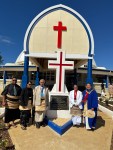
When Cyclone Gita struck Tonga in February 2018, it left a trail of widespread destruction, and the Siasi Uesiliana Tau’ataina’ O Tonga (SUTT) church in Mu’a was among the many structures damaged. Yet amid the debris, the cross outside the church stood firm, a poignant symbol of resilience. The following is a collection of photos I captured 5 months after the destruction.

https://youtu.be/XZJY52XjKXA?si=TclgzoKoRao8KiUA

In the years that followed, homes, businesses, and places of worship were gradually rebuilt. The Mu’a Falelotu Toetu’u, which translates to Sanctuary or Church Resurrection, congregation raised funds from both local supporters and the Tongan diaspora, with families, groups, and individuals contributing generously to the cause. Though the project faced a series of unexpected delays, perseverance and faith carried them forward. Finally, by the grace of God, the new church was completed and dedicated to God’s glory on June 23, 2026.

So glad I was present to witness the dedication.

Fkfeta’i ‘Eiki he me’a kotoa!


Tags: , , ,

Returning Home: A Journey of Faith, Memory, and Gratitude

Returning Home: A Journey of Faith, Memory, and Gratitude

July 15, 2026

Gratitude: A Different Kind of Journey

There are some journeys that stay with you long after you’ve unpacked your suitcase. This was one of them.

As I was preparing and packing for this trip, I realized something that brought me joy: this was the first trip in a while that did not involve attending a funeral. My recent travels had been shaped by loss and saying goodbye to loved ones. Some of those journeys took me across the Pacific, while another took me to the Pacific Northwest. Each carried its own weight of grief. This time was different. This time, I packed with a heart full of anticipation, gratitude, and joy. I didn’t know what to expect; I just wanted to be a part of the celebration in Tonga.

I must also admit that what gave me the courage to make the journey this time was knowing that I would not be traveling alone. Other members of my family were making the trip from Alaska, and we would all meet in Tonga. There was comfort in knowing we would experience this sacred occasion together. That simple fact made all the difference. I also notified a couple of family members in Tonga a few days before my arrival. 

Faith: Celebrating Two Hundred Years

The primary reason for my visit was to participate in the bicentennial celebration of Christianity in the Kingdom of Tonga, celebrated by the Siasi Uesiliana Tau’atāina ‘o Tonga during its Annual Conference. Two hundred years is an extraordinary milestone. It is difficult to fully grasp the generations of faith, sacrifice, worship, and witness that have shaped the church throughout those two centuries. To be present for such a historic celebration was a gift in itself.

But for me, there was another moment that I did not want to miss. 

Memory: Returning to My Home Church

I had the privilege of attending the dedication and consecration of the new Sisasi Uesiliana Tau’ataina ‘O Tonga (SUTT) Church in Mu’a, Tatakamotonga, my home church.

This is the church where I was baptized.

This is the church where my grandmother, Ana, faithfully walked with me to worship.

This is the church where my faith was first nurtured and formed.

Standing there, surrounded by thousands of worshippers, I found myself overwhelmed with gratitude. It is difficult to find the words to describe what it meant to return, not simply to a building, but to a place that shaped who I am. Memories came flooding back. I felt the deep connection between past and present, between childhood and ministry, between the faith that was planted in me decades ago and the life God has since called me to live.

I was simply thankful to be there.

Most people had no idea who I was, and honestly, that didn’t matter.

I wasn’t there to be recognized.

I was there because I felt I belonged.

Even if my only role that day was standing at the entrance (self-appointed), joyfully welcoming people as they arrived (with my camera on), I considered it an honor. Thousands made their way into Mu’a that day, and I found great joy in greeting them with a smile. Sometimes the greatest privilege isn’t standing on the platform; sometimes it is simply standing at the gate, welcoming others into the presence of God.

Hope: Rebuilding What Was Lost

The day carried even greater significance because of what had come before.

In 2018, Cyclone Gita devastated Tonga, and this church was among the many buildings that suffered catastrophic damage. That year also happened to be my last visit to Tonga. Six months after the storm, I stood in the ruins of this very church. The roof had been torn completely away, and the destruction was heartbreaking. It was difficult to imagine how such a beloved place of worship could ever be restored.

Yet the Church has always been a people of hope.

Through the generosity of countless families (including ours), congregations, groups, and fundraising efforts across Tonga and throughout the Methodist connection abroad, a new church rose from the devastation. Today, it stands larger, stronger, and more beautiful, not as a monument to human achievement, but as a testimony to God’s faithfulness and to what God’s people can accomplish together.

To witness its dedication to the glory of God was profoundly moving.

Connection: Remembering One Another

One of the unexpected blessings of the trip was reconnecting with childhood friends whom I had not seen since we were children. Time has changed our faces, and I must admit, I didn’t recognize many of them. We remembered one another by name.

There is something beautiful about that.

Years may pass, oceans may separate us, lives may take us in different directions, but some connections remain. The same moana that separates can now be viewed as a bridge. We laughed, shared stories, remembered old times, reconnected with extended family, and formed new friendships through the broader Methodist connection. It reminded me that the Church is more than buildings and events. It is relationships. It is community. It is the family of God spread across generations and around the world.

Gratitude: Looking Back, Looking Forward

As I reflect on this journey, my heart is simply full.

Full of gratitude.

Full of memories.

Full of hope.

Sometimes we return home expecting to revisit the past. Instead, God reminds us that our past continues to shape our present, and that every step of our journey has been held together by grace.

For that, I give thanks to God.

Until next time, Tonga, ‘Ofa lahi atu fau!

Sela 


Tags: , , , , , , , , , , ,

Amelia Lolohea Namoa Funeral: Maumau Ceremony

Amelia Lolohea Namoa Funeral: Maumau Ceremony

Amelia Lolohea Namoa Funeral

Maumau Ceremony: A traditional Tongan funeral practice

December 17 – 20, 2025

Kaua’i, Hawai’i 

The sun was beginning to dip lower over Kaua’i, casting long shadows that mirrored the heaviness in our hearts. It was the final day of our gathering, that bittersweet moment when the reality of departure sets in. Soon, the family would scatter—some to other islands, others back to the mainland. For my younger brother, Kaueni, his daughter, Mata, and me, the long route back to Texas loomed ahead. We had spent a couple of days in a cocoon of collective grief, and now, the world was waiting to rush back in.

The journey to this final afternoon had been a sacred marathon. On Friday, we held the wake from 5:00 PM until 11:00 PM—a sea of black attire and meaningful Tongan hymns that narrate our grief and hope. Then came the “midnight snack,” Tongan style. For us, a light late-night bite isn’t a granola bar; it’s a full feast complete with a roast pig! I had to laugh at the scale of it, but that communal meal sustained us for the vigil. Amelia’s body remained in the church all night, her children staying by her side until dawn. Saturday morning brought the final service from 9:00 AM until approximately 1:00 PM. We then proceeded to the Kaua’i Memorial Gardens, returning Amelia’s body to the earth while her soul returned to God.

Earlier in the day, the ‘Ulumotu’a, Lua Lolohea (Amelia’s older brother), told us to return to the church fellowship hall for one last event. I agreed to be there, not fully knowing what would take place, but knowing it was important to show up. When I walked in, the ladies had the Maumau Ceremony ready. I was essentially thrust into the deep end without a choice. This was a sharp contrast to this past February, when my second-oldest brother, Sione, died. At that time, some of my sisters-in-law asked me to cut their children’s hair, but because I didn’t fully understand the depth of the tradition, we didn’t proceed.

In Tongan culture, the word maumau translates to “damage,” “broken,” “destruction,” or “waste.” In the sacred context of a traditional Tongan funeral (putu or me’a faka’eiki), it refers specifically to the ritual of hair cutting. In the past, this ritual takes place after 10 days of mourning after the burial. Today, it takes place after the burial. This act is a profound symbolic gesture of grief, humility, and the sacrifice or “destruction” of one’s own beauty or honor to pay tribute to the deceased. A person’s hair, especially a woman’s hair, is considered one of her most precious attributes and a symbol of her personal honor. By cutting it, they are physically demonstrating that their own status and beauty are secondary to the loss of their loved one.

The word Maumau emphasizes that we are intentionally “spoiling” something valuable about ourselves as an offering of respect and love for the deceased.

The ritual is governed by the social hierarchy that defines Tongan Family life. The maumau is performed by those who are of a lower rank than the deceased. When a father dies, his children, his paternal nieces and nephews, and certain maternal relatives perform the ritual. For a mother or sister, her brother’s children and specific maternal relatives (kau liongi) perform it. Her own children do not perform it, but are participants for their father or their father’s sister. The mother’s side of the family is always considered lower in rank than the father’s side, which is why maternal relatives are consistently included.

Often, the hair is cut by the Fahu, who holds the highest rank in the family. The fahu is usually the father’s eldest sister or her children. In Amelia’s case, the fahu was her first cousin, Sela. Amelia’s father, Tupou, and Sela’s mother, Lile, were siblings. My mother, Lile, was the second-oldest female, but because her oldest sister and her daughter had died, Sela (me) was the next in line. Furthermore, the family specifically asked me to Fahu.

This was my first time participating in this practice, as it was for most of us this day. There was a bit of confusion at the beginning, but one of the moms graciously corrected us. Though we were hesitant at first, the practice and tradition take on profound meaning when we understand them. 

Sometimes funerals happen so quickly that we want everything to go according to our schedule. But death is never convenient, and it always disrupts. There should always be a heaviness with funerals to acknowledge the loss of life and the emptiness that the family will feel.

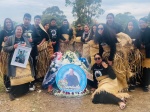
At the beginning of the ceremony, one of the moms gave a speech. And then, one by one, a niece or nephew approached me wearing their ta’ovala—large, old, or coarse waist mats. During mourning, family members wear large, old, or coarse mats around their waist. The oversized ta’ovala, which typically covers from head to toe, signifies that one is being overcome by grief to attend to one’s appearance. At the same time, the physical discomfort of the mat embodies the inner anguish of loss. The bigger the ta’ovala, the lower in rank you are; the liongis wear the largest ones. As they approached, I cut a portion of their hair as a sign of love, respect, submission, and shared mourning. Traditionally, the cut is shoulder-length, but today, it is just a trim. The physical alteration serves s a reminder of loss and a testament to the mourner’s devotion to the deceased.

Central to the Maumau Ceremony is the role of the Fahu. Her presence is essential, and her actions carry significant weight. Gifts were given for the Fahu, including Tongan mats, ngatu (tapa cloth), blankets, and money. This act symbolizes her acceptance of their offering of humility, love, and grief.

For those who understand and value our culture and tradition, Maumau is deeply an emotional and humbling experience. It reinforces that death is disruptive and carries an emotional weight, allowing space for grief and communal acknowledgment of loss. We’re glad to carry forward this tradition and practice.

A traditional kava ceremony had also taken place, but that’ll be another post. Present at this Kava Ceremony and funeral procession were two nobles: Lords Vaha’i and Fakatulolo.

Rest in peace, Amelia! Toka ā ‘ihe nonga Moe Fiemalie ‘a e ‘Eiki!

‘Ofa lahi atu, Sela 


Tags: , , , , , , , , , , , , , , , ,

Second Review Of Moana 2 From A Critical Lens

Second Review Of Moana 2 From A Critical Lens

12.7.24

Second Review of Moana 2 From a Critical Lens

When I wrote my first review of Moana 2, I reflected on the power of storytelling, particularly when it comes to our Pasifika heritage. I encouraged us to hold space for both critique and appreciation—to celebrate the visibility the film brings while remaining aware of the complexities of how our stories are told. Now, as I think more deeply, I will review it from a critical lens, especially about the younger generation in my family, I have a question for you:

Do you know your story? Do you know your people’s talanoa (stories)?

Ko ho’o ha’u mei fe? ‘Oku ke ‘ilo ho’o talanoa?

I hope we’re not relying on Disney to teach us about our cultural heritage. When someone else tells our story, it comes with a twist—and a cost. The twist is that palangi (foreigners) will always frame it through their lens. What is the cost? Exploitation. While Moana 2 showcases Pasifika culture beautifully, it’s essential to ask who benefits. Disney has made billions off these films, yet our islands and communities see little of that profit. Couldn’t a company of Disney’s magnitude contribute to fighting climate change, which directly impacts many of our islands? Or perhaps fund scholarships for Pasifika youth to help preserve and promote our culture?

As I said before, the best way to tell our talanoa is for us to tell it ourselves. Share them with your children, your family, and your community. Write books. Create short films. Use your gifts to tell our truths.

And another thing—I’ve seen many of our Pasifika people engaged in debates on social media about identity, race, and ethnicity. While these talanoa (conversations) can be insightful and thought-provoking, they can also become exhausting. It’s difficult to have meaningful dialogue with those who lack the same depth of knowledge, lived experience, or cultural roots. Everyone views the world from a unique position shaped by their background and privileges. Colonization, at its core, seeks to erase these differences—pressuring us to conform to its standards while erasing the richness of our identities and cultures.

A vital part of preserving our culture and talanoa is language. Do you speak your cultural language? For many in the diaspora, the importance of our native languages is often overlooked. Native speakers acquire the language naturally at home, not in a classroom. When we fail to pass on our languages, we fail to pass on our culture—and in doing so, we risk fulfilling the colonizer’s agenda. Language is a core part of identity, and its loss leads to the erosion of cultural knowledge and traditions. To speak only the colonizer’s language and embrace only the master’s culture, including religion, is to slowly lose ourselves. Valuing and preserving our native languages is an act of resistance, resilience, and love for our heritage.

Still, I have to acknowledge the film’s positives. Moana 2 represents Pasifika people from across Polynesia, Micronesia, and Melanesia. This is a big deal. Representation matters—not just in movies, but also in classrooms, corporate boardrooms, and churches. And it’s worth noting how far we’ve come. The film avoids the stereotypical portrayals of Pasifika people as savages or troublemakers, which we’ve seen far too often in media.

For example, think of the offensive depictions in Jonah from Tonga (the TV mini-series) or the 2014 Sochi Olympics, where Tonga’s representation was reduced to a marketing ploy by a German underwear company. In my critique of the Sochi debacle, I wrote:

“If imperialism and colonialism are defined by acts in which a dominant culture marginalizes subgroups and exploits a minority group, then this is precisely what happened… While the physical presence of Tonga was clearly represented at the Olympic Winter Games, the name Bruno Banani is anything but representative of the island kingdom and its rich culture and traditions.”

(You can read the full critique on my blog: Representation Matters.)

So, while Moana 2 isn’t perfect, it’s an opportunity and a gateway to something greater. It offers visibility and a chance for us to reflect on our talanoa. It’s a reminder of the importance of owning our stories and the urgency of preserving the cultural pillars that sustain them, like language.

Ultimately, Moana 2 shines a light on the resilience, beauty, and interconnectedness of our people. But it’s up to us to take it further—celebrating our heritage, challenging exploitation, and ensuring that our talanoa remains vibrant, authentic, and unapologetically ours.

Malō ‘aupito. ‘Ofa atu. Folau ā.

sela finau


Tags: , , , , , ,

A Tongan Polynesian Pasifika Islander Christian American Perspective on Moana 2

A Tongan Polynesian Pasifika Islander Christian American Perspective on Moana 2

12.3.24

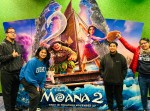
Disney’s Moana 2 continues its journey into the Pacific, once again presenting the richness of Pasifika culture to the world. This weekend, I went to watch it, joining countless others across Oceania and around the globe. The film is already breaking records at the box office, earning the biggest Thanksgiving week gross in cinema history. As a Polynesian and Tongan, I watched the film with both excitement and apprehension. The movie is not just entertainment; it holds cultural significance, especially as it brings our stories, traditions, and identities to a global audience.

One aspect that stood out was the portrayal of Māui. In Pasifika and Polynesian mythology, Māui is not merely a fictional character or a fun-loving trickster. Māui is a revered demigod who, in my culture, fished the Polynesian islands out of the ocean using his fishhook. These stories are not simply “mythology” in the dismissive sense often applied by outsiders; they are our cultural heritage, embodying values, wisdom, and identity passed down through generations. Moana, which means “ocean,” is more than a backdrop in these stories—it is central to our existence. The ocean connects our islands and our people; we are an extension of the moana.

I was struck by one reviewer’s criticism that Moana 2 was “too dark” and “scary” for children, based on her Christian perspective. Yet this same person praised the musical Wicked, a story steeped in themes of darkness, witches, and sorcery. What’s wrong with this picture? Such critiques reveal a troubling double standard, where the richness of Pasifika storytelling is dismissed while Western-centric narratives are embraced.

It’s understandable to feel apprehensive about an unfamiliar culture, but it’s not acceptable to label it as “scary” or “gross” without first seeking to understand it. Perhaps I’m projecting, as I typically research thoroughly before sharing an opinion publicly. Pasifika mythology existed long before Christianity arrived on our islands, and like every culture, we have creation stories that deserve respect and thoughtful engagement.

At its core, Moana 2 is a story of both literal and metaphorical voyages. Moana embarks on a journey filled with challenges, self-discovery, and growth, embracing her calling and her deep connection to her ancestors—the master navigators of the seas. Like any voyage, she cannot succeed alone. Moana learns the importance of relying on others, drawing on their diverse expertise and strengths to weather the storms.

This theme resonates deeply with Pasifika culture, which is inherently communal rather than individualistic. The voyage is not a solo endeavor but a shared experience. In Polynesian tradition, this sense of interconnectedness extends to the wisdom of our ancestors, whose guidance continues to illuminate our path, helping us navigate life’s uncertainties together.

The music didn’t resonate with me as the original. While using Polynesian stars like Dwayne Johnson and Auli’i Cravalho was appreciated, some music pieces could have benefited from a stronger connection to the Pasifika setting, aligning more closely with the cultural roots of the story. However, Moana 2 does excel in portraying the interconnectedness of people, nature, and culture. Moana’s journey highlights our reliance on community, respect for the ocean, and continuing connection to our ancestors.

Cultural appreciation and cultural appropriation often walk a fine line in films like this. While Disney makes strides in research and consultation, it’s vital for viewers—especially those unfamiliar with Pasifika cultures—to approach the film with humility and curiosity, not arrogance or ignorance.

As a pastor in the United Methodist Church, I view films like Moana 2 as opportunities for dialogue—between cultures, faiths, and generations. To my fellow Pasifika people: let’s hold space for both critique and appreciation, using this opportunity to affirm our talanoa or stories’ rightful place in the world. To others: may this film be a doorway to greater understanding and respect for the beauty and complexity of Polynesian culture.

Malō ‘aupito. ‘Ofa atu. Folau ā. 

Sela Finau


Tags: , , , , , , , , , , , , , , ,

Tongan Funerals

Tongan Funerals

8.18.23

A couple of weeks ago, I traveled to Sydney, Australia, to attend the funeral of my brother, Sam Taufa (referred to as a first cousin in Western terms). Sam’s mother, Ma’ata Ngalo’afe, and my father, Tevita Vaiola Finau, are siblings. It is important to note that the word “cousin” does not exist in the Tongan language and culture. Our “cousins” are considered our brothers and sisters. The entire round-trip, spanning from Dallas-Fort Worth to Los Angeles and finally to Sydney, consumed two days in transit, accompanied by two days on location, and two weeks for recovery. I am still in recovery mode. (LOL) The airborne segment alone lasted over eighteen hours, while the rest comprised a 6-hour airport layover, complete with check-in, TSA, Customs, and baggage claim. While some may view the trip as unnecessary, in my family and culture, it is a part of our identity.

I typically take numerous photos and short videos for a couple of reasons. Firstly, I love capturing moments, enabling me to reflect upon them in the future. Secondly, when I participate in significant events like funerals, I recognize the value of allowing distant family members who couldn’t be present to witness the presence of other family members. Additionally, given the uncertainty of our next gathering, we seize the chance to capture photographs with our family. Despite being thousands of miles away, technology facilitates our connection and collective grieving. Furthermore, no matter the distance, the moana (ocean) connects life, for it is life.

Moreover, a funeral, particularly within the Tongan or Pasifika context, also serves as a family reunion. Despite the somber circumstances, it offers an opportunity for family members to reconnect. Sometimes, years or even decades may have passed since our last encounter, but we effortlessly pick up from where we left off when we gather. Occasionally, we may not have met, but our family connections through our parents and grandparents are significant enough that we pick up the bonding easily through talanoa or by telling stories. This atmosphere is lightened by humor being a substantial part of our family and culture. Consequently, even during this event, marked by sadness, the occasion retains a lighthearted quality. This perspective on life acknowledges the inevitability of both beginnings and endings, life and death.

Moreover, as a pastor, I’ve observed a distinct contrast in the nature of funerals. In the context of Tongan/Polynesian/Pasifika funerals, our family, friends, along with various churches, irrespective of their denominations and the broader community, come together to honor the departed and be present for the family. This collective presence is why our funerals often draw large attendances. This pattern sharply contrasts with the majority of funerals I have officiated or attended within American churches where I have served.

Several individuals unfamiliar with our culture have inquired about the wrap worn around our waist. Alongside wearing modest black attire, these wraps are known as ta’ovala and constitute the traditional dress code for Tongan funerals. The labor-intensive mat-woven ta’ovala worn to a funeral signifies one’s relationship to the deceased.

Tongan society and families adhere to a hierarchical structure. While Tonga might be perceived by some as upholding matriarchal traditions due to the higher rank of sisters over brothers, the distribution of roles and responsibilities actually maintains a harmonious balance between genders. A prime illustration of this is the ‘ulumotu’a role, entrusted to the eldest brother or son. This role entails overseeing significant family occasions, including funerals.

Within Tongan funerals, the ta’ovala you don reflects your place within the hierarchical structure in relation to the deceased. The father holds the position of the family head. This designation extends to the father’s brothers (referred to as uncles in Western terms), who are regarded as additional fathers. The highest rank on the hierarchy chart is held by the father’s sisters and their children, with the eldest sister occupying the top position, known as a “fahu.” This individual receives special recognition during funerals, weddings, and other family ceremonies.

When attending a funeral for a father’s sister or her children, demonstrating humility and rank involves donning the largest ta’ovala, which covers the body from head to toe. Those who of this rank are known as liongi. They are typically responsible for food preparation and serving. At a father’s funeral, his children also wear significant ta’ovala displaying great loss.

Tongan funerals are often financially demanding for families due to the comprehensive services (typically food) provided to visitors, primarily from churches, who visit the family in the days leading up to the wake and on the day and night of the funeral. Thankfully, family members, churches, and the community help. Traditionally, Tongan funerals span an entire night, culminating in a final worship service in the morning, followed by the burial ceremony.

It’s worth highlighting that the collaborative spirit of Tongans underscores our emphasis on communal living as opposed to individualism. This principle is integral to our identity and cultural fabric, which is why Pasifika families might not always prioritize accumulating wealth. It’s a rarity to encounter a Tongan family stockpiling possessions, for these belongings are typically shared with those within the community who require assistance.

Regarding Sam’s funeral, since his mother is my father’s younger sister, my designated role is a “liongi.” However, my sister Evaline, who would typically be considered a first cousin in Western terms but holds a higher rank due to being the daughter of my father’s sister Etina, gave me a pass because of my pastoral role. Such are the few benefits of being a Reverend! Haha. Representing our family as “liongi” were my two nieces, Mele and Mata (who traveled with me), and my nephew, Lieni (who lives in Sydney), in honor of their fathers, my brothers.

Additional customs are observed within the context of a funeral procession, encompassing practices such as the duration of wearing black attire to symbolize mourning and participating in rituals like hair-cutting ceremonies.

Fundamentally, the social hierarchy within Tongan society takes the form of a familial structure. Each individual is assigned a distinct role and position, analogous to finding a seat at a communal table. One might serve as a server at one table, only to be seated as the esteemed guest of honor at another.

Please inform me if you possess knowledge that contradicts my explanation of Tongan traditions and customs. My explanation is not definitive, and I am sure there are other significances I am unaware of. However, this is my understanding of Tongan funerals and the existing hierarchical system within our culture.

Malō ‘aupito.

Sela Finau

#SamTaufa #TonganFunerals #PasifikaCulture #Polynesian #Oceania #MoanaCulture


Tags:

Hospitality

Hospitality

6.22.23

On Monday, I attended a Juneteenth celebration in Fort Worth in the sweltering Texas heat with four Alaska nieces and nephews. The vibrant celebration and march with Opal Lee at 96 years of age was historic. However, with so many people, it was boiling with the harsh sun. Eager to return to the refuge of the AC in our car and eventually back home, our desperate longing was rudely interrupted when we discovered a flat tire when we reached our car. Frustrated, I contacted AAA, only to learn that assistance wouldn’t arrive for another grueling 1.5 hours. This news was disheartening, especially considering the scorching heat, with temperatures soaring into the 90s. Inside the car, the air conditioning struggled to keep up, intensifying the discomfort and exacerbating the squabbles between the restless kids.

Desperate for a solution, I quickly searched for the nearest gas station equipped with an air pump, and to my relief, it was less than a mile away. Determined, I contemplated whether I could safely drive to the station. However, after moving a mere 50 feet, it became clear that further car movement would result in irreparable damage to the rim. I reluctantly reached out to AAA again, pleading with them to expedite assistance, emphasizing the presence of children.

As I surveyed our surroundings, I noticed the homeowner whose curb we had parked sitting on their porch. I decided to approach them, asking if the kids could seek refuge from the sweltering heat under their shaded patio. With warm smiles and open arms, three incredible black women eagerly welcomed us. Despite the heat, a slight breeze danced through the air, and their fan whirred energetically, creating a sanctuary from the scorching sun. They had a cooler brimming with ice-cold water, which they graciously offered. We gratefully accepted their hospitality, feeling profound gratitude for their kindness.

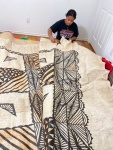
Eventually, our tire was fixed. I offered $20 for the water, but the women refused, further exemplifying their genuine generosity. The next day, the children and I decided to express our profound gratitude. We presented these remarkable women with three pieces of Tongan – Polynesian art, ngatu (tapa), carefully cut and thoughtfully chosen to convey our thanks. This encounter left an unforgettable mark on our hearts, teaching us invaluable lessons.

Firstly, I learned that true hospitality cannot be bought or quantified; it is a genuine expression of compassion and empathy. Secondly, what initially seemed like an unfortunate situation transformed into a profoundly positive experience, reminding us of the potential for unexpected blessings even in the face of adversity. Lastly, I couldn’t help but view this encounter as a divine intervention, a moment guided by a higher power – God. It was as if the movement of our car led us precisely to the doorstep of these three angelic souls, who were more than willing to extend hospitality.

Undoubtedly, this unexpected encounter became the highlight of our day. Our hearts overflowed with gratitude for the kindness and compassion shown to us by these beautiful ladies, Dorothy, Rhonda, and Reagan.

Malō’ aupito! ‘Ofa lahi atu! Thank you, Jesus!


Tags: ,

Exploitation In The South Pacific Island Kingdom Of Tonga

<brunobanani.jpg>

Exploitation In The South Pacific Island Kingdom Of Tonga

On Friday, February 7, 2014, the XXII Olympic Winter Games officially opened in Sochi, Russia, and history was made. There were 88 countries represented with a total of 2,800 athletes. Seven of those countries made their Winter Olympic debut. One of those countries and one of those athletes were from a tiny group of islands named Tonga located in Oceania, also known as the South Pacific.

In the South Pacific climate, there is no winter (at least not in the sense of “Winter Olympics”). The weather is tropical with the average temperature in Tonga at 73° F (23° C).

In Olympic President Thomas Bach’s speech at the Opening Ceremony, he asserted that the “Olympic Games are a sports festival in praising human diversity in great unity” and all people are welcome regardless of their national origin. In reality, he failed to acknowledge the role of power and money. The Olympic Games are anything but a place where human diversity is truly represented, and certainly not an actual goal.

To be part of the festival of “human diversity in great unity” one must have access to an adequate amount of money and power, either from family wealth and/or sponsorship. If diversity and unity were the Olympic Games’ goal, then it failed to recognize countries and persons unable to participate due to lack of resources or funding.

It seems that countries around the world are not represented by their human capacity at the Olympic Games, but by countries that flaunt their power and money in the elite development of their athletes, or better yet, by a display of selected human athletes from particular countries who are blessed with winter seasons and mountainous terrains.

Thus, it seems rather odd that a country from the South Pacific would even consider or blink an eye at a chance to participate and be represented at the Winter Olympic Games. But Tonga, that tiny group of islands barely visible on the world map, taking part in the Winter Olympics in Sochi was exactly what happened. It was a dream come true for the tiny island kingdom and its solo athlete in luge, a sport unheard of in the South Pacific, nonetheless Tonga.

If imperialism and colonialism are defined by acts in which a dominant culture marginalizes subgroups and exploits a minority group, then this is precisely what happened. Subjugation of the island kingdom by misuse and abuse of power and money by the hegemonic culture is what took place, an unjust practice all-too-often familiar to people of color.

While the physical presence of Tonga was clearly represented at the Olympic Winter Games, the name Bruno Banani is anything but representative of the island kingdom and its rich culture and traditions, where naming is one of its core values and beliefs. While a small percentage of Tongans hold German surnames due to their ancestral heritage, Bruno Banani is not one of them. Rather, Bruno Banani is a German men’s underwear company that made a shrill business dealing with Makai Inc., a Euro-American marketing company, in the name of global capitalism and in overt exploitation of a marginalized group’s inspiration.

Clearly, corporate responsibility and human dignity were not the goal, especially not for a young company like Makai that is zealous to make a name for itself with experiential strategies.

“The domestication of the corporation into local society serves only to further mystify the location of power, which rest not in the locality but in the global headquarters of the company which coordinates its activities. Global capitalism is not a site for liberation but manipulation. It is the site the inhabitants of which must be liberated from themselves (stripped of their identities) to be homogenized into the global culture of capital” (Arif Dirlik, “The Global in the Local”).

As the tale has been told, Makai Inc came across this mischievous golden opportunity as an experimental marketing tactic in 2008. The company had a connection with Tonga’s Princess Salote Mafile’o Pilolevu Tuita, who desired for her country to be represented at the Winter Olympics.

A search for a luger was conducted in the island kingdom. There were at least 20-30 other athletes that showed up and tried out, even when they did not understand the sport of luge. Who wouldn’t if one might be given the lifetime opportunity to represent their beloved country in the Winter Olympic Games.

The selected luger was Fuahea Semi, a 26-year-old computer science student, who played rugby as a hobby with his friends. He was chosen not only for his athletic abilities but also for his humility. Who knew that humbleness was to be part of a sport’s qualification! Perhaps it is a necessary criterion for a Western marketing firm with its white executives’ coercion and exploitation of a brown body, with less chance of any protest from the brown-skin Polynesian man.

Makai Inc explained to Fuahea Semi that luge was an expensive sport and that he would need a sponsor to cover the expenses. To attract the right sponsor, Fuahea Semi, would need to change his name. This is when Makai approached Bruno Banani, the German underwear company with their scheming creative marketing ideas.

The Tongan athlete, Fuahea Semi, who had never experienced temperature below 60° F and snow, moved to Germany in 2009 to train. Many questions were raised about this dark-skinned man’s name being Bruno Banani, and they were all given the response that it was his name, and his passport was proof.

After a year of training, Bruno Banani came within one point of qualifying for the Vancouver Olympics in 2010, but he crashed in his last attempt and ended up in the hospital.

In December 2013, Bruno Banani qualified for the Sochi Winter Olympics placing 28th out of 42 lugers, even after newspapers and websites from around the world suggested that Bruno Banani should not be allowed to compete for a spot in Sochi. Bruno Banani finished 32nd in the luge final in Sochi.

This story has made world headlines. Even Thomas Bach, the president of the International Olympics Committee, called it “a perverse marketing idea….done in bad taste to change your name to that of a sponsor. This has nothing to do with proper marketing.” Yet, since Bruno Banani qualified for the Sochi games, the Olympics Committee could not prevent him from competing. After all, his name was legally changed on his passport.

Even though Bruno Banani was the name that made history for the individual and the island kingdom’s debut in the Winter Olympics Games, the whole thing was ludicrous and disconcerting. As Frantz Fanon wrote in Wretched of the Earth, “The colonist also makes history and knows it. The history he writes is therefore not the history of the country he is despoiling, but the history of his own nations’ [exploitations, racism, and injustice].”

Tu’a ‘Ofa Atu, Sela E. Finau. s.finau@yahoo.com. Follow her blog @ https://finaus.wordpress.com/.

Image


Tags: , , , , , ,

a brief story about Trinity H.S. football

Tonight, Trinity High School of Euless will play against Pearland High School of Houston for the Texas 5A Division State Championship Title. Trinity is no newcomer to this State Championship game, as they’ve won the title in 2005, 2007, and 2009. They are one of the highest ranked high school football team in the country, and have been featured on many national news. They have even done national commercials.

As some of you religion practitioners and academics may want to associate the name Trinity to that of the Father, Son, and Holy Spirit, unfortunately, the usage of Trinity here refers to the three cities, Hurst, Euless, and Bedford, which comprised the school district in which Trinity High School is located. It is often referred to as HEB or MidCities, and it sits right outside of DFW International Airport. It is also halfway between Dallas and Fort Worth. These three cities hold one of the highest concentrated area for Tongans in the U.S., estimated 7-8,000 people.

My interest in this story is sort of family, country, community, and religion related. It’s family related because I have nephews and other family members playing for Trinity. It’s country related because about half of the players are second generation migrants from my native country of Tonga. There’s also a couple of players from our neighborly sister island of Samoa. It’s community related because the entire Polynesian Community will be at this game, along with thousands of the residents of these three cities. It’s religion related because here in Texas, high school football is a civil religion. So perhaps the name Trinity does after all refer to a religion, just in a slightly different context. But then again, church and religion is of extreme importance to these island folks.

Moreover, in case you haven’t encountered too many Tongans or Polynesians in life, they are naturally big boned, overgrown, and many times overweight. They are naturally fit to play sports such as rugby and football. Statistics show that these overgrown island guys have a higher chance of getting into the NFL than any other ethnic group.

Below are a few links that also tell the story:

NFL highlight: http://www.youtube.com/watch?v=0I6vb4XwV0o&feature=share

Haka-an ancient island warrior dance: http://www.youtube.com/watch?v=sxB25H4yB2E&feature=related

With Katie Couric and the CBS Evening News: http://www.youtube.com/watch?v=sbHffGdbEpw

NPR: http://www.npr.org/templates/story/story.php?storyId=95295728

New York Times: http://www.nytimes.com/2008/10/09/sports/09iht-TONGANS.1.16810356.html

As much as I would like to see these Tongan kids pursue an academic career, and take great passion with their academic studies, I realize that I must also show up to give them support for what their heart, spirit, and mind long for. While football is not the only way to succeed in life, for many of these kids, it is a way of hope to a future. It is a door of opportunity for them not only as individuals, but also for their many families. After all, an island story is never about an individual as much as it is about the families and community.

Whether Trinity wins or not is beside the point. From a far away south pacific island of Tonga to the lone star state of Texas, Trinity football is a way of life not only for these island folks but also for the thousands of local supporters. I am glad to be a part of this culture and excitement. As an alumni of Trinity High School and as a Tongan-American, I will be attending the game tonight at the Dallas Cowboys Stadium in Arlington at 8p.m.

Perhaps this brief story about Trinity High School football is not just a Trinity story, not just a football story, not just an island story, but it is also an American story.

T’S UP!!!

*originally written 12/18/2010 as a facebook note. 43,321 people in attendance.

*updated with photos. earlier game photos were borrowed from Kautai.


Leave a comment

Posted by on January 19, 2011 in Culture, Family, Tonga


Tags: , , , ,

The islands, my home!

Last week I was back home in the islands. No, not back home in Tonga, but back home in Hawai’i. You see, I grew up in Hawai’i. I attended elementary school and intermediate school there. So, it is in many ways my home. I have countless families there, old childhood friends and, even childhood enemies (that unfortunately are still fresh in memory). The islands – my home.

It had been a long 2 ½ years since I last visited. I have been occupied and consumed with working full-time and attending grad school full time that my leisure time is very limited. Needless to say, this was a much needed visit.

I was so excited when I landed in the islands that I started taking pictures at the airport. If you’re familiar with Honolulu International Airport, you know there’s an open walkway from the gate to the baggage claim area. I couldn’t resist, but like a child who just landed in Disneyland, I immediately took out my camera and started taking pictures of the sky, of the coconut trees, the airport tower, and of the Welcome sign. To tell you the truth, I really wanted to run over and hug the coconut trees. Talk about a FOB, (Fresh off the Boat) that was me. Just replace the Boat with a Plane and you get a FOP – Fresh off the Plane! My Polynesian family will know what I’m talking about here, and laugh. Ok, family, you may stop laughing now.

While there in the islands, I visited with families, ate lots of local food, and went sight seeing, as if I hadn’t seen them a million times before. I took so many pictures of everyday stuff, that my family said I was such a tourist. That didn’t bother me one bit because if you have ever left home, and went back for a visit, then you know what I’m talking about. I have so many pictures of the beach, the coconut trees, the skies, the mountains, and even The Bus, and Zippy’s.

One particular day, my nephew Lua and I drove around the island. Lua is 20 years old, born and raised in Hawai’i. I asked Lua if we could visit ‘Iolani Palace, and Lua, to my surprise, said he’s never been there. I said, “What? You have got to be kidding me. Come, let me give you a tour as I used to take field trips there when I was in grade school.” Off we go to ‘Iolani Palace. We then walked next door to the State Capital Building. Both of these places symbolizes many things to many people, but for me as a Pacific Islander, it reminds me of what once was a monarchy of the Hawai’ian people- a Polynesian people – my people. Perhaps you have only read the story of Hawai’i from the conquers’ perspectives. But this is not the full story. The story of ‘Iolani Palace is filled with deceit, forced, assault, betrayal, oppression, and defeat. Do you know of Queen Lili’uokalani? She was the beloved Princess, later Queen of the Hawai’ian people. She was the last of the monarchy that was overthrown by the U.S. Government. The next door building, the State Capital, tells the story only from the conquers’ victorious account. Hawai’i, the 50th State, it has become!

Anyway, to finish telling about my island visit – we visited my childhood neighborhoods, schools, and ate at the local joint called Rainbow, in Kapahulu. The food at Rainbow is okay, but visiting Rainbow wasn’t just about the food; rather, it was about visiting my child-hood days, and I do mean child-HOOD days! It was an awesome feeling to be back in the Hood of Kapahulu.

Returning back home to the islands was truly the best feeling for me, and it was the highlight of my Summer. Returning back to the daily roasting 100+ degree temperature in the Dallas-Fort Worth metroplex was just the opposite. Although I have lived here, in the DFW area most of my life, it is not home. And, I am often reminded by those inquiring minds by asking, “where are you from?” (A story for another day!)

As another semester gets under way in just a few more days, I am not at all thrilled. I wish that I can hurry up and finish this degree so I can move back to the islands. I moved away from the islands not by my own choice. It was my parent’s decision, in search for a better way of life. I have high regards for my parents. But twenty plus years later, is it a better way of life? I will say that my parent’s decision afforded me many opportunities, economically and academically. We’ll leave it there for now.

Still, I miss home. I miss the islands.

-I was moved to write this note after reading my friend Brian’s note on being “homesick.” Thanks, Brian.

-Originally written as a facebook note, August 2010.

 
Leave a comment

Posted by on September 7, 2010 in Culture, Postcolonial, Tonga


Tags: , , , , , ,