
12.7.24
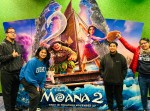
Second Review of Moana 2 From a Critical Lens
When I wrote my first review of Moana 2, I reflected on the power of storytelling, particularly when it comes to our Pasifika heritage. I encouraged us to hold space for both critique and appreciation—to celebrate the visibility the film brings while remaining aware of the complexities of how our stories are told. Now, as I think more deeply, I will review it from a critical lens, especially about the younger generation in my family, I have a question for you:
Do you know your story? Do you know your people’s talanoa (stories)?
Ko ho’o ha’u mei fe? ‘Oku ke ‘ilo ho’o talanoa?
I hope we’re not relying on Disney to teach us about our cultural heritage. When someone else tells our story, it comes with a twist—and a cost. The twist is that palangi (foreigners) will always frame it through their lens. What is the cost? Exploitation. While Moana 2 showcases Pasifika culture beautifully, it’s essential to ask who benefits. Disney has made billions off these films, yet our islands and communities see little of that profit. Couldn’t a company of Disney’s magnitude contribute to fighting climate change, which directly impacts many of our islands? Or perhaps fund scholarships for Pasifika youth to help preserve and promote our culture?
As I said before, the best way to tell our talanoa is for us to tell it ourselves. Share them with your children, your family, and your community. Write books. Create short films. Use your gifts to tell our truths.
And another thing—I’ve seen many of our Pasifika people engaged in debates on social media about identity, race, and ethnicity. While these talanoa (conversations) can be insightful and thought-provoking, they can also become exhausting. It’s difficult to have meaningful dialogue with those who lack the same depth of knowledge, lived experience, or cultural roots. Everyone views the world from a unique position shaped by their background and privileges. Colonization, at its core, seeks to erase these differences—pressuring us to conform to its standards while erasing the richness of our identities and cultures.
A vital part of preserving our culture and talanoa is language. Do you speak your cultural language? For many in the diaspora, the importance of our native languages is often overlooked. Native speakers acquire the language naturally at home, not in a classroom. When we fail to pass on our languages, we fail to pass on our culture—and in doing so, we risk fulfilling the colonizer’s agenda. Language is a core part of identity, and its loss leads to the erosion of cultural knowledge and traditions. To speak only the colonizer’s language and embrace only the master’s culture, including religion, is to slowly lose ourselves. Valuing and preserving our native languages is an act of resistance, resilience, and love for our heritage.
Still, I have to acknowledge the film’s positives. Moana 2 represents Pasifika people from across Polynesia, Micronesia, and Melanesia. This is a big deal. Representation matters—not just in movies, but also in classrooms, corporate boardrooms, and churches. And it’s worth noting how far we’ve come. The film avoids the stereotypical portrayals of Pasifika people as savages or troublemakers, which we’ve seen far too often in media.
For example, think of the offensive depictions in Jonah from Tonga (the TV mini-series) or the 2014 Sochi Olympics, where Tonga’s representation was reduced to a marketing ploy by a German underwear company. In my critique of the Sochi debacle, I wrote:
“If imperialism and colonialism are defined by acts in which a dominant culture marginalizes subgroups and exploits a minority group, then this is precisely what happened… While the physical presence of Tonga was clearly represented at the Olympic Winter Games, the name Bruno Banani is anything but representative of the island kingdom and its rich culture and traditions.”
(You can read the full critique on my blog: Representation Matters.)
So, while Moana 2 isn’t perfect, it’s an opportunity and a gateway to something greater. It offers visibility and a chance for us to reflect on our talanoa. It’s a reminder of the importance of owning our stories and the urgency of preserving the cultural pillars that sustain them, like language.
Ultimately, Moana 2 shines a light on the resilience, beauty, and interconnectedness of our people. But it’s up to us to take it further—celebrating our heritage, challenging exploitation, and ensuring that our talanoa remains vibrant, authentic, and unapologetically ours.
Malō ‘aupito. ‘Ofa atu. Folau ā.
sela finau


When My Homeland Becomes a Flavor: Tonga
September 3, 2026
When My Homeland Becomes a Flavor: Tonga
Last week at my local H‑E‑B grocery store in Texas, I was caught off guard in the baking aisle. There it was: a 4‑ounce bottle of vanilla extract called Tonga for $12.98. Regal. Rich. Luxuriant. From the Kingdom of Tonga, it read.
My homeland, reduced to a shelf label. Grief wrapped in frustration.
I shared my experience on social media. Comments rolled in, many well‑meaning: “It promotes our island!” “It helps our farmers and employees!” And they’re not wrong. Some Tongans are benefiting as farmers are paid, jobs are created, and the economy grows. I acknowledge that. I want our people to thrive.
But beyond the economics, there’s a deeper issue: cultural misappropriation. Taking our name, our identity, our story and packaging it for profit without our ownership or meaningful control. The question that keeps circling: If the beans are from Tonga, why is someone else owning the brand and keeping most of the premium?
The Fiji Water Parallel
This isn’t new. Look at Fiji Water, a US‑owned company, run by billionaires, that extracts water from Fijian aquifers and sells it globally at premium prices. Meanwhile, a portion of Fiji’s population lacks access to clean drinking water. The profits flow disproportionately out of the country. Some revenue returns, yes, but the government had to impose an export tax to capture a fraction of the value.
Fiji has been reduced to a water bottle. Tonga is being reduced to a vanilla bottle: same script, different ingredient.
The Warning of Nauru
If you want to see where unfettered extraction leads, look at the country Nauru (recently renamed the Republic of Naoero). Once wealthy from phosphate mining, foreign companies strip‑mined over 80% of the island into a barren lunar wasteland of jagged coral, bare skin and broken bones. When the resource ran out, the foreigners left. Today, Nauru survives by selling passports and hosting a detention center.
Vanilla today, phosphate yesterday. Same pattern: we supply the raw material, others take the brand and the profit, and we’re left with the scraps. And when the crop falters or the market shifts, will they stay? Or will they leave us like Nauru?
I’m Not Against Export. But At What Cost?
We need trade partners. We need buyers for our farmers’ harvests. But if the price of export is handing over our nation’s name and reducing our identity to a shelf product with an expiration date, that price is too high.
Nahhh, I don’t stand for that.
Our identity is not a flavor of the month. It is not a marketing gimmick to be shelved next to the cinnamon and nutmeg, bought, used, and trashed. We are a Kingdom. We are a people who crossed the moana in double-hulled canoes long before Europeans dared to leave the shore. We do not exist to be consumed and discarded.
So I’m drafting letters. One to Cook’s Flavoring Company asking for transparency on their supply chain and profit share. Another to our Prime Minister asking: why aren’t we building our own processing plants, our own brands, our own capacity? Why aren’t we adding value at home before anything leaves our shores? Furthermore, there needs to be some form of international law to prevent a country’s name from being commodified, especially by a foreign company.
This isn’t about rejecting outside investment. It’s about awareness. It’s about asking the hard questions. It’s about making sure that when the world buys Tonga vanilla, Tonga itself, not just a few farmers, but our entire nation and identity, actually benefits in a meaningful, lasting way.
We are not Fiji, whose water wealth flows to US billionaires while locals go thirsty. We are not Nauru, hollowed out and forgotten.
But we will be if we keep letting others define our worth, extract our goods, and walk away with our name.
The land is ours. The beans are ours. The name Tonga is ours.
Let’s wake up, build our own table, and make sure the next bottle on that shelf is ours, from bean to brand, and from profit to people.
🇹🇴 ‘Ofa atu. Mālō ‘aupito.
Sela Finau
Posted by Sela E. Finau on September 3, 2026 in Community, Culture, Economics, Family, Life, Tonga
Tags: commentary, cooks, cultural misappropriation, culturalmisappropriation, exploitation, fiji, food, moana, nauru, pacific, pasifica, pasifika, Tonga, tonga-vanilla, tongavanilla, travel, vanilla