RSS

Tag Archives: pasifika

Amelia Lolohea Namoa Funeral: Maumau Ceremony

Amelia Lolohea Namoa Funeral: Maumau Ceremony

Amelia Lolohea Namoa Funeral

Maumau Ceremony: A traditional Tongan funeral practice

December 17 – 20, 2025

Kaua’i, Hawai’i 

The sun was beginning to dip lower over Kaua’i, casting long shadows that mirrored the heaviness in our hearts. It was the final day of our gathering, that bittersweet moment when the reality of departure sets in. Soon, the family would scatter—some to other islands, others back to the mainland. For my younger brother, Kaueni, his daughter, Mata, and me, the long route back to Texas loomed ahead. We had spent a couple of days in a cocoon of collective grief, and now, the world was waiting to rush back in.

The journey to this final afternoon had been a sacred marathon. On Friday, we held the wake from 5:00 PM until 11:00 PM—a sea of black attire and meaningful Tongan hymns that narrate our grief and hope. Then came the “midnight snack,” Tongan style. For us, a light late-night bite isn’t a granola bar; it’s a full feast complete with a roast pig! I had to laugh at the scale of it, but that communal meal sustained us for the vigil. Amelia’s body remained in the church all night, her children staying by her side until dawn. Saturday morning brought the final service from 9:00 AM until approximately 1:00 PM. We then proceeded to the Kaua’i Memorial Gardens, returning Amelia’s body to the earth while her soul returned to God.

Earlier in the day, the ‘Ulumotu’a, Lua Lolohea (Amelia’s older brother), told us to return to the church fellowship hall for one last event. I agreed to be there, not fully knowing what would take place, but knowing it was important to show up. When I walked in, the ladies had the Maumau Ceremony ready. I was essentially thrust into the deep end without a choice. This was a sharp contrast to this past February, when my second-oldest brother, Sione, died. At that time, some of my sisters-in-law asked me to cut their children’s hair, but because I didn’t fully understand the depth of the tradition, we didn’t proceed.

In Tongan culture, the word maumau translates to “damage,” “broken,” “destruction,” or “waste.” In the sacred context of a traditional Tongan funeral (putu or me’a faka’eiki), it refers specifically to the ritual of hair cutting. In the past, this ritual takes place after 10 days of mourning after the burial. Today, it takes place after the burial. This act is a profound symbolic gesture of grief, humility, and the sacrifice or “destruction” of one’s own beauty or honor to pay tribute to the deceased. A person’s hair, especially a woman’s hair, is considered one of her most precious attributes and a symbol of her personal honor. By cutting it, they are physically demonstrating that their own status and beauty are secondary to the loss of their loved one.

The word Maumau emphasizes that we are intentionally “spoiling” something valuable about ourselves as an offering of respect and love for the deceased.

The ritual is governed by the social hierarchy that defines Tongan Family life. The maumau is performed by those who are of a lower rank than the deceased. When a father dies, his children, his paternal nieces and nephews, and certain maternal relatives perform the ritual. For a mother or sister, her brother’s children and specific maternal relatives (kau liongi) perform it. Her own children do not perform it, but are participants for their father or their father’s sister. The mother’s side of the family is always considered lower in rank than the father’s side, which is why maternal relatives are consistently included.

Often, the hair is cut by the Fahu, who holds the highest rank in the family. The fahu is usually the father’s eldest sister or her children. In Amelia’s case, the fahu was her first cousin, Sela. Amelia’s father, Tupou, and Sela’s mother, Lile, were siblings. My mother, Lile, was the second-oldest female, but because her oldest sister and her daughter had died, Sela (me) was the next in line. Furthermore, the family specifically asked me to Fahu.

This was my first time participating in this practice, as it was for most of us this day. There was a bit of confusion at the beginning, but one of the moms graciously corrected us. Though we were hesitant at first, the practice and tradition take on profound meaning when we understand them. 

Sometimes funerals happen so quickly that we want everything to go according to our schedule. But death is never convenient, and it always disrupts. There should always be a heaviness with funerals to acknowledge the loss of life and the emptiness that the family will feel.

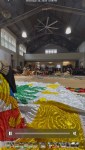
At the beginning of the ceremony, one of the moms gave a speech. And then, one by one, a niece or nephew approached me wearing their ta’ovala—large, old, or coarse waist mats. During mourning, family members wear large, old, or coarse mats around their waist. The oversized ta’ovala, which typically covers from head to toe, signifies that one is being overcome by grief to attend to one’s appearance. At the same time, the physical discomfort of the mat embodies the inner anguish of loss. The bigger the ta’ovala, the lower in rank you are; the liongis wear the largest ones. As they approached, I cut a portion of their hair as a sign of love, respect, submission, and shared mourning. Traditionally, the cut is shoulder-length, but today, it is just a trim. The physical alteration serves s a reminder of loss and a testament to the mourner’s devotion to the deceased.

Central to the Maumau Ceremony is the role of the Fahu. Her presence is essential, and her actions carry significant weight. Gifts were given for the Fahu, including Tongan mats, ngatu (tapa cloth), blankets, and money. This act symbolizes her acceptance of their offering of humility, love, and grief.

For those who understand and value our culture and tradition, Maumau is deeply an emotional and humbling experience. It reinforces that death is disruptive and carries an emotional weight, allowing space for grief and communal acknowledgment of loss. We’re glad to carry forward this tradition and practice.

A traditional kava ceremony had also taken place, but that’ll be another post. Present at this Kava Ceremony and funeral procession were two nobles: Lords Vaha’i and Fakatulolo.

Rest in peace, Amelia! Toka ā ‘ihe nonga Moe Fiemalie ‘a e ‘Eiki!

‘Ofa lahi atu, Sela 


Tags: , , , , , , , , , , , , , , , ,

A Tongan Polynesian Pasifika Islander Christian American Perspective on Moana 2

A Tongan Polynesian Pasifika Islander Christian American Perspective on Moana 2

12.3.24

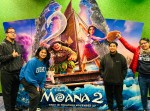
Disney’s Moana 2 continues its journey into the Pacific, once again presenting the richness of Pasifika culture to the world. This weekend, I went to watch it, joining countless others across Oceania and around the globe. The film is already breaking records at the box office, earning the biggest Thanksgiving week gross in cinema history. As a Polynesian and Tongan, I watched the film with both excitement and apprehension. The movie is not just entertainment; it holds cultural significance, especially as it brings our stories, traditions, and identities to a global audience.

One aspect that stood out was the portrayal of Māui. In Pasifika and Polynesian mythology, Māui is not merely a fictional character or a fun-loving trickster. Māui is a revered demigod who, in my culture, fished the Polynesian islands out of the ocean using his fishhook. These stories are not simply “mythology” in the dismissive sense often applied by outsiders; they are our cultural heritage, embodying values, wisdom, and identity passed down through generations. Moana, which means “ocean,” is more than a backdrop in these stories—it is central to our existence. The ocean connects our islands and our people; we are an extension of the moana.

I was struck by one reviewer’s criticism that Moana 2 was “too dark” and “scary” for children, based on her Christian perspective. Yet this same person praised the musical Wicked, a story steeped in themes of darkness, witches, and sorcery. What’s wrong with this picture? Such critiques reveal a troubling double standard, where the richness of Pasifika storytelling is dismissed while Western-centric narratives are embraced.

It’s understandable to feel apprehensive about an unfamiliar culture, but it’s not acceptable to label it as “scary” or “gross” without first seeking to understand it. Perhaps I’m projecting, as I typically research thoroughly before sharing an opinion publicly. Pasifika mythology existed long before Christianity arrived on our islands, and like every culture, we have creation stories that deserve respect and thoughtful engagement.

At its core, Moana 2 is a story of both literal and metaphorical voyages. Moana embarks on a journey filled with challenges, self-discovery, and growth, embracing her calling and her deep connection to her ancestors—the master navigators of the seas. Like any voyage, she cannot succeed alone. Moana learns the importance of relying on others, drawing on their diverse expertise and strengths to weather the storms.

This theme resonates deeply with Pasifika culture, which is inherently communal rather than individualistic. The voyage is not a solo endeavor but a shared experience. In Polynesian tradition, this sense of interconnectedness extends to the wisdom of our ancestors, whose guidance continues to illuminate our path, helping us navigate life’s uncertainties together.

The music didn’t resonate with me as the original. While using Polynesian stars like Dwayne Johnson and Auli’i Cravalho was appreciated, some music pieces could have benefited from a stronger connection to the Pasifika setting, aligning more closely with the cultural roots of the story. However, Moana 2 does excel in portraying the interconnectedness of people, nature, and culture. Moana’s journey highlights our reliance on community, respect for the ocean, and continuing connection to our ancestors.

Cultural appreciation and cultural appropriation often walk a fine line in films like this. While Disney makes strides in research and consultation, it’s vital for viewers—especially those unfamiliar with Pasifika cultures—to approach the film with humility and curiosity, not arrogance or ignorance.

As a pastor in the United Methodist Church, I view films like Moana 2 as opportunities for dialogue—between cultures, faiths, and generations. To my fellow Pasifika people: let’s hold space for both critique and appreciation, using this opportunity to affirm our talanoa or stories’ rightful place in the world. To others: may this film be a doorway to greater understanding and respect for the beauty and complexity of Polynesian culture.

Malō ‘aupito. ‘Ofa atu. Folau ā. 

Sela Finau


Tags: , , , , , , , , , , , , , , ,

The islands, my home!

Last week I was back home in the islands. No, not back home in Tonga, but back home in Hawai’i. You see, I grew up in Hawai’i. I attended elementary school and intermediate school there. So, it is in many ways my home. I have countless families there, old childhood friends and, even childhood enemies (that unfortunately are still fresh in memory). The islands – my home.

It had been a long 2 ½ years since I last visited. I have been occupied and consumed with working full-time and attending grad school full time that my leisure time is very limited. Needless to say, this was a much needed visit.

I was so excited when I landed in the islands that I started taking pictures at the airport. If you’re familiar with Honolulu International Airport, you know there’s an open walkway from the gate to the baggage claim area. I couldn’t resist, but like a child who just landed in Disneyland, I immediately took out my camera and started taking pictures of the sky, of the coconut trees, the airport tower, and of the Welcome sign. To tell you the truth, I really wanted to run over and hug the coconut trees. Talk about a FOB, (Fresh off the Boat) that was me. Just replace the Boat with a Plane and you get a FOP – Fresh off the Plane! My Polynesian family will know what I’m talking about here, and laugh. Ok, family, you may stop laughing now.

While there in the islands, I visited with families, ate lots of local food, and went sight seeing, as if I hadn’t seen them a million times before. I took so many pictures of everyday stuff, that my family said I was such a tourist. That didn’t bother me one bit because if you have ever left home, and went back for a visit, then you know what I’m talking about. I have so many pictures of the beach, the coconut trees, the skies, the mountains, and even The Bus, and Zippy’s.

One particular day, my nephew Lua and I drove around the island. Lua is 20 years old, born and raised in Hawai’i. I asked Lua if we could visit ‘Iolani Palace, and Lua, to my surprise, said he’s never been there. I said, “What? You have got to be kidding me. Come, let me give you a tour as I used to take field trips there when I was in grade school.” Off we go to ‘Iolani Palace. We then walked next door to the State Capital Building. Both of these places symbolizes many things to many people, but for me as a Pacific Islander, it reminds me of what once was a monarchy of the Hawai’ian people- a Polynesian people – my people. Perhaps you have only read the story of Hawai’i from the conquers’ perspectives. But this is not the full story. The story of ‘Iolani Palace is filled with deceit, forced, assault, betrayal, oppression, and defeat. Do you know of Queen Lili’uokalani? She was the beloved Princess, later Queen of the Hawai’ian people. She was the last of the monarchy that was overthrown by the U.S. Government. The next door building, the State Capital, tells the story only from the conquers’ victorious account. Hawai’i, the 50th State, it has become!

Anyway, to finish telling about my island visit – we visited my childhood neighborhoods, schools, and ate at the local joint called Rainbow, in Kapahulu. The food at Rainbow is okay, but visiting Rainbow wasn’t just about the food; rather, it was about visiting my child-hood days, and I do mean child-HOOD days! It was an awesome feeling to be back in the Hood of Kapahulu.

Returning back home to the islands was truly the best feeling for me, and it was the highlight of my Summer. Returning back to the daily roasting 100+ degree temperature in the Dallas-Fort Worth metroplex was just the opposite. Although I have lived here, in the DFW area most of my life, it is not home. And, I am often reminded by those inquiring minds by asking, “where are you from?” (A story for another day!)

As another semester gets under way in just a few more days, I am not at all thrilled. I wish that I can hurry up and finish this degree so I can move back to the islands. I moved away from the islands not by my own choice. It was my parent’s decision, in search for a better way of life. I have high regards for my parents. But twenty plus years later, is it a better way of life? I will say that my parent’s decision afforded me many opportunities, economically and academically. We’ll leave it there for now.

Still, I miss home. I miss the islands.

-I was moved to write this note after reading my friend Brian’s note on being “homesick.” Thanks, Brian.

-Originally written as a facebook note, August 2010.

 
Leave a comment

Posted by on September 7, 2010 in Culture, Postcolonial


Tags: , , , , , ,