RSS

Tag Archives: tonga

A Tongan Polynesian Pasifika Islander Christian American Perspective on Moana 2

A Tongan Polynesian Pasifika Islander Christian American Perspective on Moana 2

12.3.24

Disney’s Moana 2 continues its journey into the Pacific, once again presenting the richness of Pasifika culture to the world. This weekend, I went to watch it, joining countless others across Oceania and around the globe. The film is already breaking records at the box office, earning the biggest Thanksgiving week gross in cinema history. As a Polynesian and Tongan, I watched the film with both excitement and apprehension. The movie is not just entertainment; it holds cultural significance, especially as it brings our stories, traditions, and identities to a global audience.

One aspect that stood out was the portrayal of Māui. In Pasifika and Polynesian mythology, Māui is not merely a fictional character or a fun-loving trickster. Māui is a revered demigod who, in my culture, fished the Polynesian islands out of the ocean using his fishhook. These stories are not simply “mythology” in the dismissive sense often applied by outsiders; they are our cultural heritage, embodying values, wisdom, and identity passed down through generations. Moana, which means “ocean,” is more than a backdrop in these stories—it is central to our existence. The ocean connects our islands and our people; we are an extension of the moana.

I was struck by one reviewer’s criticism that Moana 2 was “too dark” and “scary” for children, based on her Christian perspective. Yet this same person praised the musical Wicked, a story steeped in themes of darkness, witches, and sorcery. What’s wrong with this picture? Such critiques reveal a troubling double standard, where the richness of Pasifika storytelling is dismissed while Western-centric narratives are embraced.

It’s understandable to feel apprehensive about an unfamiliar culture, but it’s not acceptable to label it as “scary” or “gross” without first seeking to understand it. Perhaps I’m projecting, as I typically research thoroughly before sharing an opinion publicly. Pasifika mythology existed long before Christianity arrived on our islands, and like every culture, we have creation stories that deserve respect and thoughtful engagement.

At its core, Moana 2 is a story of both literal and metaphorical voyages. Moana embarks on a journey filled with challenges, self-discovery, and growth, embracing her calling and her deep connection to her ancestors—the master navigators of the seas. Like any voyage, she cannot succeed alone. Moana learns the importance of relying on others, drawing on their diverse expertise and strengths to weather the storms.

This theme resonates deeply with Pasifika culture, which is inherently communal rather than individualistic. The voyage is not a solo endeavor but a shared experience. In Polynesian tradition, this sense of interconnectedness extends to the wisdom of our ancestors, whose guidance continues to illuminate our path, helping us navigate life’s uncertainties together.

The music didn’t resonate with me as the original. While using Polynesian stars like Dwayne Johnson and Auli’i Cravalho was appreciated, some music pieces could have benefited from a stronger connection to the Pasifika setting, aligning more closely with the cultural roots of the story. However, Moana 2 does excel in portraying the interconnectedness of people, nature, and culture. Moana’s journey highlights our reliance on community, respect for the ocean, and continuing connection to our ancestors.

Cultural appreciation and cultural appropriation often walk a fine line in films like this. While Disney makes strides in research and consultation, it’s vital for viewers—especially those unfamiliar with Pasifika cultures—to approach the film with humility and curiosity, not arrogance or ignorance.

As a pastor in the United Methodist Church, I view films like Moana 2 as opportunities for dialogue—between cultures, faiths, and generations. To my fellow Pasifika people: let’s hold space for both critique and appreciation, using this opportunity to affirm our talanoa or stories’ rightful place in the world. To others: may this film be a doorway to greater understanding and respect for the beauty and complexity of Polynesian culture.

Malō ‘aupito. ‘Ofa atu. Folau ā. 

Sela Finau
 

Tags: , , , , , , , , , , , , , , ,

Hospitality

Hospitality

6.22.23

On Monday, I attended a Juneteenth celebration in Fort Worth in the sweltering Texas heat with four Alaska nieces and nephews. The vibrant celebration and march with Opal Lee at 96 years of age was historic. However, with so many people, it was boiling with the harsh sun. Eager to return to the refuge of the AC in our car and eventually back home, our desperate longing was rudely interrupted when we discovered a flat tire when we reached our car. Frustrated, I contacted AAA, only to learn that assistance wouldn’t arrive for another grueling 1.5 hours. This news was disheartening, especially considering the scorching heat, with temperatures soaring into the 90s. Inside the car, the air conditioning struggled to keep up, intensifying the discomfort and exacerbating the squabbles between the restless kids.

Desperate for a solution, I quickly searched for the nearest gas station equipped with an air pump, and to my relief, it was less than a mile away. Determined, I contemplated whether I could safely drive to the station. However, after moving a mere 50 feet, it became clear that further car movement would result in irreparable damage to the rim. I reluctantly reached out to AAA again, pleading with them to expedite assistance, emphasizing the presence of children.

As I surveyed our surroundings, I noticed the homeowner whose curb we had parked sitting on their porch. I decided to approach them, asking if the kids could seek refuge from the sweltering heat under their shaded patio. With warm smiles and open arms, three incredible black women eagerly welcomed us. Despite the heat, a slight breeze danced through the air, and their fan whirred energetically, creating a sanctuary from the scorching sun. They had a cooler brimming with ice-cold water, which they graciously offered. We gratefully accepted their hospitality, feeling profound gratitude for their kindness.

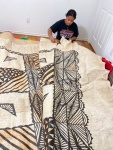
Eventually, our tire was fixed. I offered $20 for the water, but the women refused, further exemplifying their genuine generosity. The next day, the children and I decided to express our profound gratitude. We presented these remarkable women with three pieces of Tongan – Polynesian art, ngatu (tapa), carefully cut and thoughtfully chosen to convey our thanks. This encounter left an unforgettable mark on our hearts, teaching us invaluable lessons.

Firstly, I learned that true hospitality cannot be bought or quantified; it is a genuine expression of compassion and empathy. Secondly, what initially seemed like an unfortunate situation transformed into a profoundly positive experience, reminding us of the potential for unexpected blessings even in the face of adversity. Lastly, I couldn’t help but view this encounter as a divine intervention, a moment guided by a higher power – God. It was as if the movement of our car led us precisely to the doorstep of these three angelic souls, who were more than willing to extend hospitality.

Undoubtedly, this unexpected encounter became the highlight of our day. Our hearts overflowed with gratitude for the kindness and compassion shown to us by these beautiful ladies, Dorothy, Rhonda, and Reagan.

Malō’ aupito! ‘Ofa lahi atu! Thank you, Jesus!


Tags: ,

Give

thanksgivingwater

Give in the Season of Thanks-giving

In the wake of the typhoon in the Philippines, with thousands dead, 600,000 people displaced, and an estimated 11+ millions affected, those numbers seem overwhelming and difficult to digest. How can we relate or connect to such disaster from thousands of miles away? We really can’t. Unless you’re one of the millions then the seemingly horrific nightmare becomes real. No Food, No Water, No Medicine. Just waiting, desperately, for someone to come with aid.

My nephew, Solomone Finau, is in the Navy and is currently in the Philippines. Fresh out of high school last year, he eagerly joined the Navy. Isolated in the freezing tundra of Alaska, he’s had a blast traveling the world. An amazing and lifetime opportunity! But I wonder how this Navy mission in the Philippines will weight in on my nephew’s experience. Hopefully life changing, as he’s helping change and save lives.

Tonight at a Bible Study, one of our church members said to me that Tonga is ranked #2 on the list for the largest disaster risk worldwide. I looked it up and sure enough, it is. I knew that Tonga and the Pacific Islands were at high risk of sea-level rise, but I didn’t know that it was made official. Rank #1 is Vanuatu and ranked #3 is the Philippines. The ranking is from the World Risk Report, 2012, and is based on extreme exposure and high vulnerability due to proximity to the sea, with high exposure to cyclones, flooding and sea-level rise. A moment of reflection is needed here if you’re a Tongan or a Pacific Islander reading this. A moment of reflection here is needed if you don’t believe or know anything about climate change.

Anyway, it’s so easy for us living thousands of miles away to go about our daily routine and not be distracted. But as you go about the rest of your week, consider saying a prayer for those in need, especially the people of the Philippines. We’re all connected to each other because we’re human beings. And from one human being to another, consider foregoing a meal today and give a donation.

As a United Methodist Pastor, I’d say simply text UMCOR at 80888 and donate $10. If you can give more, you can always go to www.umcor.org. Another organization that I like to give to is the American Red Cross. You can also text them and donate $10 or visit their website http://www.redcross.org/. Or, check with your church or other organizations for ways to give.

In the Season of Thanksgiving, find a reason and a way to give.

 
Leave a comment

Posted by on November 14, 2013 in Life


Tags: , , , , , , , , ,

a brief story about Trinity H.S. football

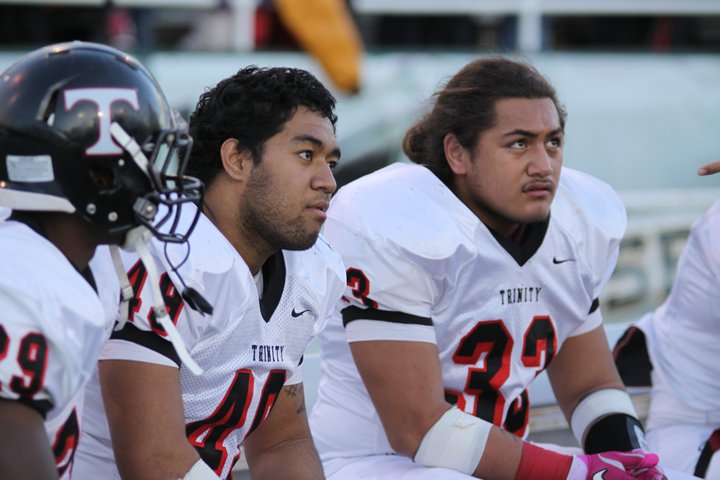
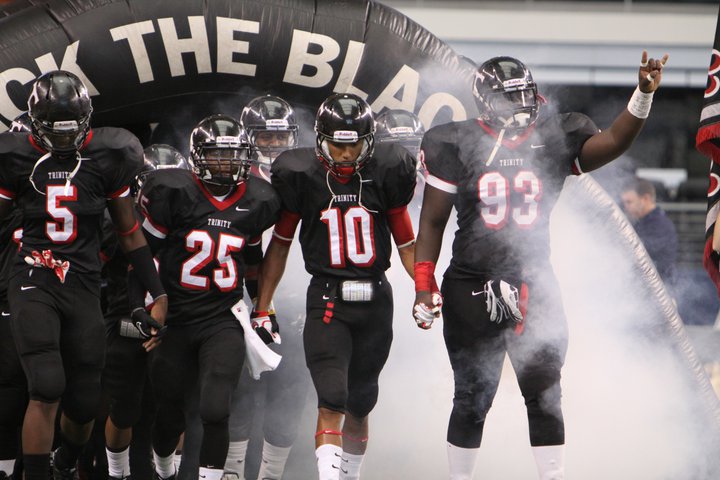
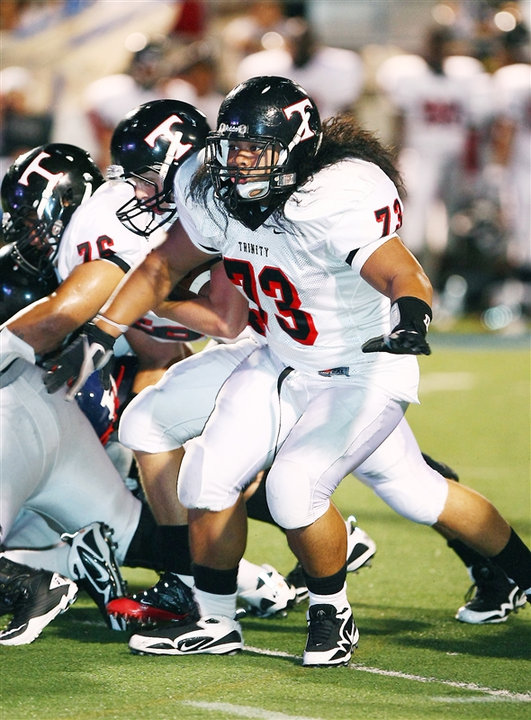
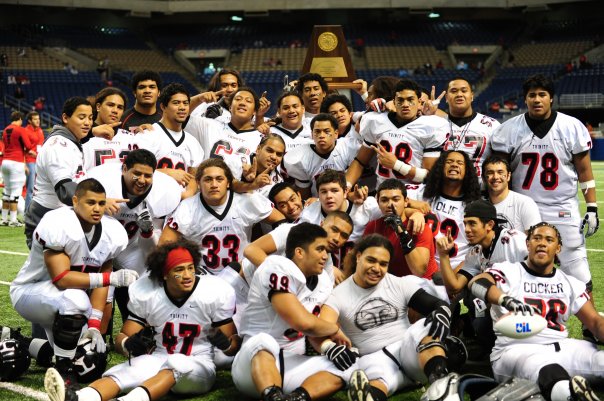
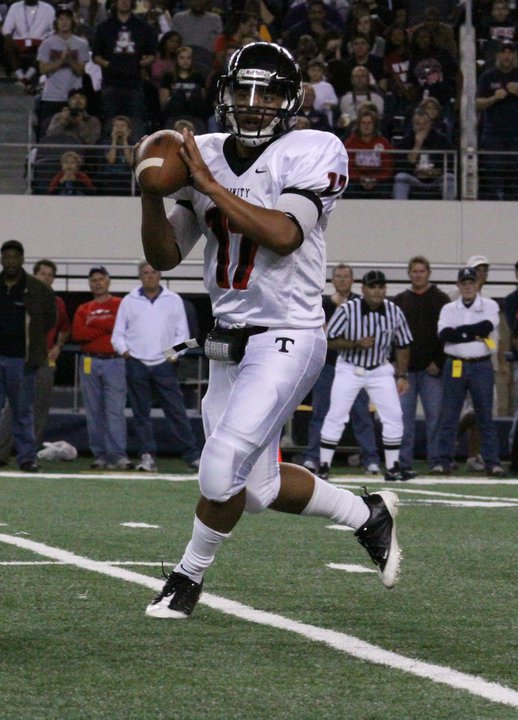
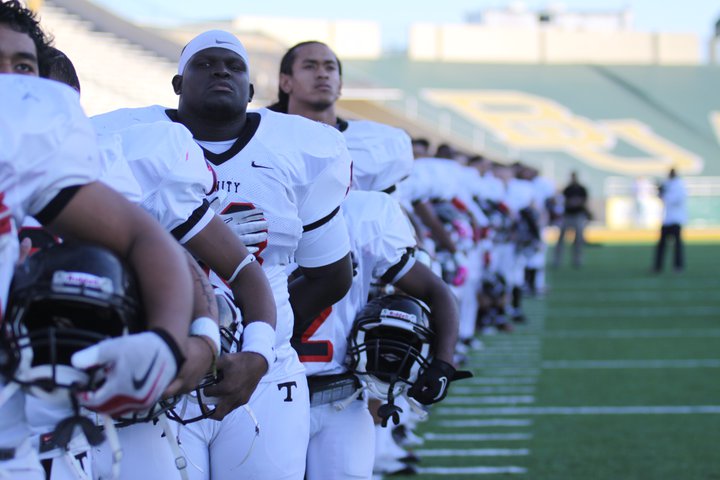
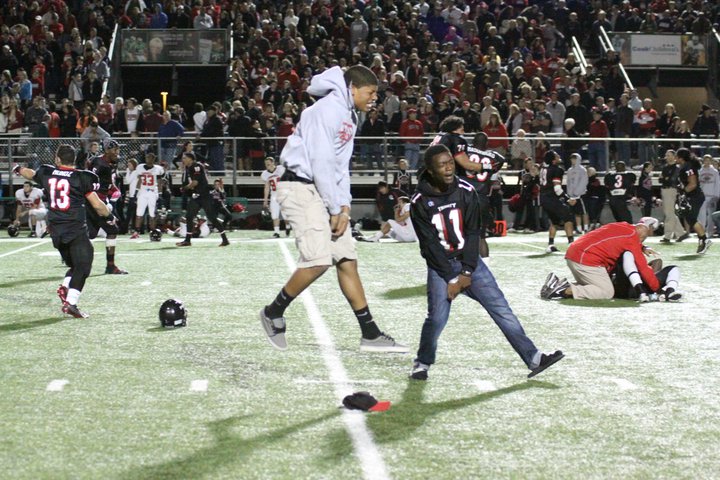
Tonight, Trinity High School of Euless will play against Pearland High School of Houston for the Texas 5A Division State Championship Title. Trinity is no newcomer to this State Championship game, as they’ve won the title in 2005, 2007, and 2009. They are one of the highest ranked high school football team in the country, and have been featured on many national news. They have even done national commercials.

As some of you religion practitioners and academics may want to associate the name Trinity to that of the Father, Son, and Holy Spirit, unfortunately, the usage of Trinity here refers to the three cities, Hurst, Euless, and Bedford, which comprised the school district in which Trinity High School is located. It is often referred to as HEB or MidCities, and it sits right outside of DFW International Airport. It is also halfway between Dallas and Fort Worth. These three cities hold one of the highest concentrated area for Tongans in the U.S., estimated 7-8,000 people.

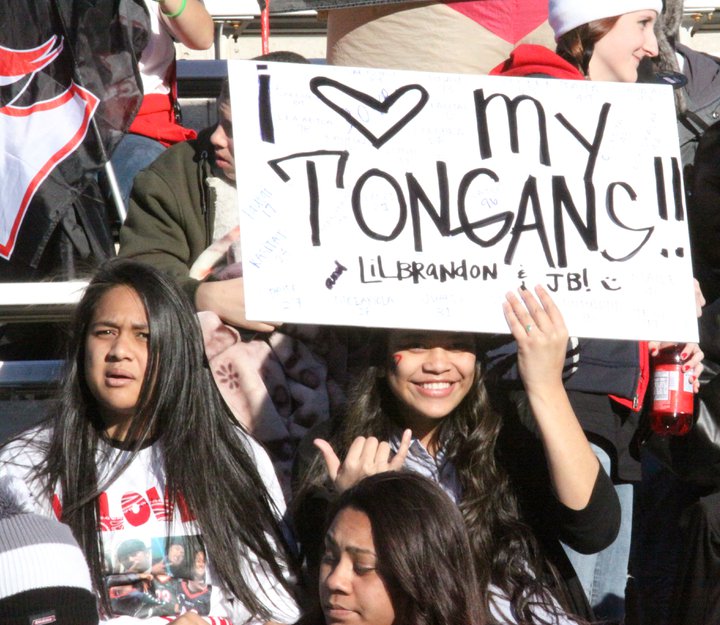
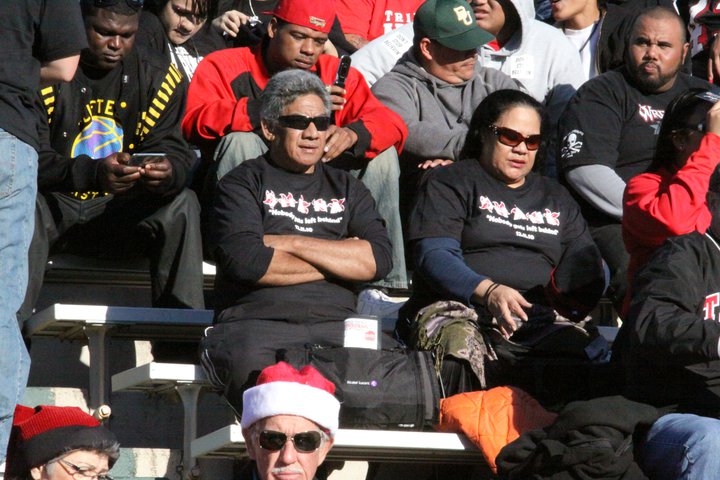
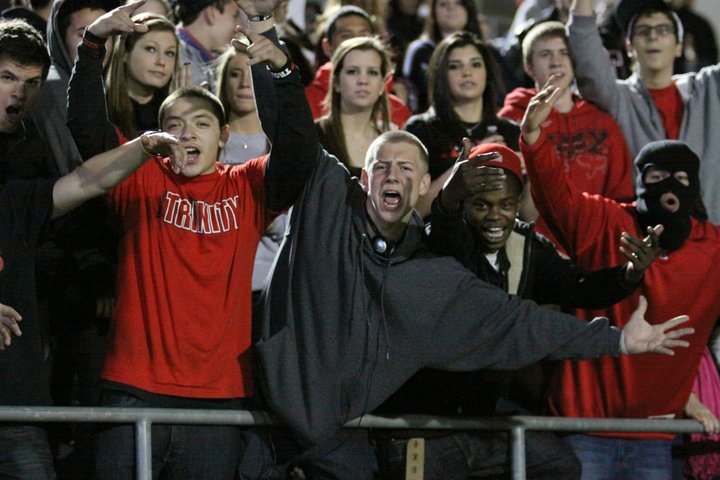
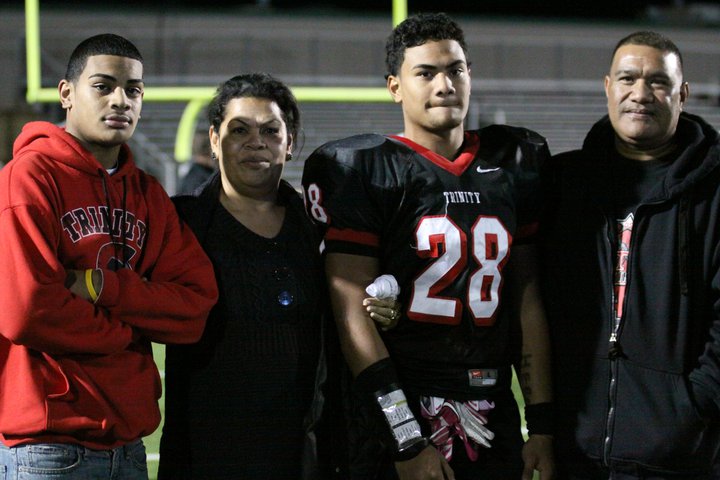
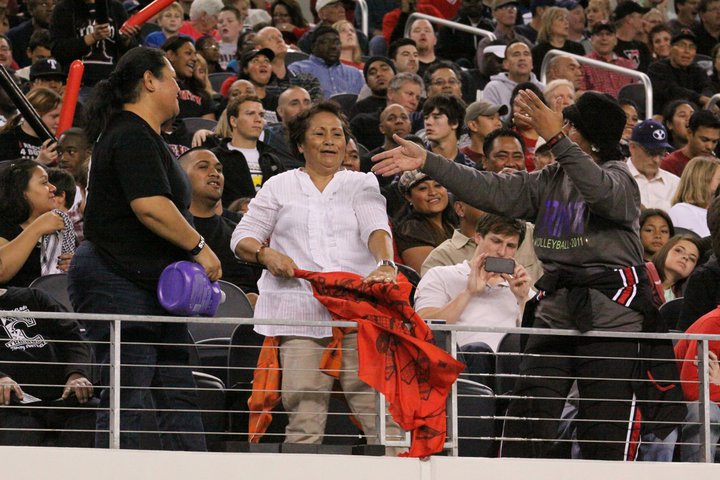
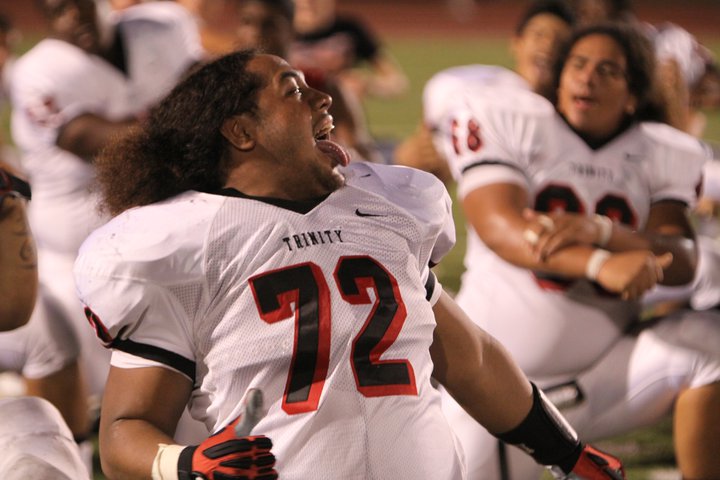
My interest in this story is sort of family, country, community, and religion related. It’s family related because I have nephews and other family members playing for Trinity. It’s country related because about half of the players are second generation migrants from my native country of Tonga. There’s also a couple of players from our neighborly sister island of Samoa. It’s community related because the entire Polynesian Community will be at this game, along with thousands of the residents of these three cities. It’s religion related because here in Texas, high school football is a civil religion. So perhaps the name Trinity does after all refer to a religion, just in a slightly different context. But then again, church and religion is of extreme importance to these island folks.

Moreover, in case you haven’t encountered too many Tongans or Polynesians in life, they are naturally big boned, overgrown, and many times overweight. They are naturally fit to play sports such as rugby and football. Statistics show that these overgrown island guys have a higher chance of getting into the NFL than any other ethnic group.

Below are a few links that also tell the story:

NFL highlight: http://www.youtube.com/watch?v=0I6vb4XwV0o&feature=share

Haka-an ancient island warrior dance: http://www.youtube.com/watch?v=sxB25H4yB2E&feature=related

With Katie Couric and the CBS Evening News: http://www.youtube.com/watch?v=sbHffGdbEpw

NPR: http://www.npr.org/templates/story/story.php?storyId=95295728

New York Times: http://www.nytimes.com/2008/10/09/sports/09iht-TONGANS.1.16810356.html

As much as I would like to see these Tongan kids pursue an academic career, and take great passion with their academic studies, I realize that I must also show up to give them support for what their heart, spirit, and mind long for. While football is not the only way to succeed in life, for many of these kids, it is a way of hope to a future. It is a door of opportunity for them not only as individuals, but also for their many families. After all, an island story is never about an individual as much as it is about the families and community.

Whether Trinity wins or not is beside the point. From a far away south pacific island of Tonga to the lone star state of Texas, Trinity football is a way of life not only for these island folks but also for the thousands of local supporters. I am glad to be a part of this culture and excitement. As an alumni of Trinity High School and as a Tongan-American, I will be attending the game tonight at the Dallas Cowboys Stadium in Arlington at 8p.m.

Perhaps this brief story about Trinity High School football is not just a Trinity story, not just a football story, not just an island story, but it is also an American story.

T’S UP!!!

*originally written 12/18/2010 as a facebook note. 43,321 people in attendance.

*updated with photos. earlier game photos were borrowed from Kautai.


Leave a comment

Posted by on January 19, 2011 in Culture


Tags: , , , ,

The islands, my home!

Last week I was back home in the islands. No, not back home in Tonga, but back home in Hawai’i. You see, I grew up in Hawai’i. I attended elementary school and intermediate school there. So, it is in many ways my home. I have countless families there, old childhood friends and, even childhood enemies (that unfortunately are still fresh in memory). The islands – my home.

It had been a long 2 ½ years since I last visited. I have been occupied and consumed with working full-time and attending grad school full time that my leisure time is very limited. Needless to say, this was a much needed visit.

I was so excited when I landed in the islands that I started taking pictures at the airport. If you’re familiar with Honolulu International Airport, you know there’s an open walkway from the gate to the baggage claim area. I couldn’t resist, but like a child who just landed in Disneyland, I immediately took out my camera and started taking pictures of the sky, of the coconut trees, the airport tower, and of the Welcome sign. To tell you the truth, I really wanted to run over and hug the coconut trees. Talk about a FOB, (Fresh off the Boat) that was me. Just replace the Boat with a Plane and you get a FOP – Fresh off the Plane! My Polynesian family will know what I’m talking about here, and laugh. Ok, family, you may stop laughing now.

While there in the islands, I visited with families, ate lots of local food, and went sight seeing, as if I hadn’t seen them a million times before. I took so many pictures of everyday stuff, that my family said I was such a tourist. That didn’t bother me one bit because if you have ever left home, and went back for a visit, then you know what I’m talking about. I have so many pictures of the beach, the coconut trees, the skies, the mountains, and even The Bus, and Zippy’s.

One particular day, my nephew Lua and I drove around the island. Lua is 20 years old, born and raised in Hawai’i. I asked Lua if we could visit ‘Iolani Palace, and Lua, to my surprise, said he’s never been there. I said, “What? You have got to be kidding me. Come, let me give you a tour as I used to take field trips there when I was in grade school.” Off we go to ‘Iolani Palace. We then walked next door to the State Capital Building. Both of these places symbolizes many things to many people, but for me as a Pacific Islander, it reminds me of what once was a monarchy of the Hawai’ian people- a Polynesian people – my people. Perhaps you have only read the story of Hawai’i from the conquers’ perspectives. But this is not the full story. The story of ‘Iolani Palace is filled with deceit, forced, assault, betrayal, oppression, and defeat. Do you know of Queen Lili’uokalani? She was the beloved Princess, later Queen of the Hawai’ian people. She was the last of the monarchy that was overthrown by the U.S. Government. The next door building, the State Capital, tells the story only from the conquers’ victorious account. Hawai’i, the 50th State, it has become!

Anyway, to finish telling about my island visit – we visited my childhood neighborhoods, schools, and ate at the local joint called Rainbow, in Kapahulu. The food at Rainbow is okay, but visiting Rainbow wasn’t just about the food; rather, it was about visiting my child-hood days, and I do mean child-HOOD days! It was an awesome feeling to be back in the Hood of Kapahulu.

Returning back home to the islands was truly the best feeling for me, and it was the highlight of my Summer. Returning back to the daily roasting 100+ degree temperature in the Dallas-Fort Worth metroplex was just the opposite. Although I have lived here, in the DFW area most of my life, it is not home. And, I am often reminded by those inquiring minds by asking, “where are you from?” (A story for another day!)

As another semester gets under way in just a few more days, I am not at all thrilled. I wish that I can hurry up and finish this degree so I can move back to the islands. I moved away from the islands not by my own choice. It was my parent’s decision, in search for a better way of life. I have high regards for my parents. But twenty plus years later, is it a better way of life? I will say that my parent’s decision afforded me many opportunities, economically and academically. We’ll leave it there for now.

Still, I miss home. I miss the islands.

-I was moved to write this note after reading my friend Brian’s note on being “homesick.” Thanks, Brian.

-Originally written as a facebook note, August 2010.

 
Leave a comment

Posted by on September 7, 2010 in Culture, Postcolonial


Tags: , , , , , ,