RSS

Category Archives: Postmodern

Love Has Come to Stay

Love Has Come to Stay

Christmas Day – December 25, 2025

John 1:14
Love Has Come to Stay

The Word became flesh and lived among us. Love did not merely visit, it moved in. God chose to dwell fully with humanity, sharing in joy and sorrow, celebration and struggle.

Christmas Day reminds us that God’s love is not limited to one night or one moment. Christ comes to stay. To walk with us through ordinary days and uncertain seasons. To guide us, heal us, and remind us that we are not alone.

Whatever today looks like for you, busy or quiet, joyful or tender, God is present. Love has taken up residence in the world, and nothing will ever be the same.

Today, rest in this gift. Christ is born. Love has come to stay.

Prayer:
God of love, we give thanks for the gift of Christ. Help us live each day rooted in your presence and guided by your love. Amen.

Merry Christmas!


Tags: , , ,

Love Has Come Near

Love Has Come Near

Christmas Eve – December 24, 2025

Luke 2:1–14
Love Has Come Near

On this holy night, love does not arrive with fanfare or force. It comes quietly, in a stable, under the cover of darkness, wrapped in vulnerability. God chooses nearness over power, presence over perfection.

The world Christ enters is not calm or orderly. It is crowded, uncertain, and restless, much like our own. Yet this is exactly where God chooses to dwell. Not waiting for everything to be right, but coming close in the middle of it all.

Tonight, we remember that love does not stand at a distance. It steps into our lives as they are. It meets us in our fears, hopes, longings, and needs. The angels’ song announces peace, not because the world is suddenly fixed, but because God is with us.

As candles are lit and voices rise in song, receive this truth: Christ is born for you. Love has come near.

Prayer:
God with us, thank you for coming close. Fill our hearts with wonder, peace, and gratitude as we welcome the birth of Christ. Amen. 

Merry Christmas! 


Tags: , , ,

Joy on the Edge of Arrival

Joy on the Edge of Arrival

Saturday, December 20, 2025

Luke 1:46–49
Joy on the Edge of Arrival

Mary sings her song before the child is born. Her joy comes not from having all the answers, but from trusting what God has started. She rejoices, not because the path is simple, but because God keeps promises.

There is a particular kind of joy that comes when we are close, close to a long-awaited moment, close to an answered prayer, close to something new taking shape. Advent holds us in that space. We are not yet at Christmas, but we can feel it approaching. Joy gathers there, at the edge of arrival.

This joy is often quiet and steady. It shows up in final preparations, in small acts of care, in the ordinary faithfulness of showing up one more time. It reminds us that God does not wait for perfect conditions to draw near.

As this Advent week comes to an end, pause for a moment. Take a breath. Notice the joy that is already here, even before everything is finished. God is closer than we think.

Prayer:
God of promise, steady our hearts as we wait. Help us rejoice in what you are already bringing to life among us. Amen.


Tags: , , , , ,

Second Review Of Moana 2 From A Critical Lens

Second Review Of Moana 2 From A Critical Lens

12.7.24

Second Review of Moana 2 From a Critical Lens

When I wrote my first review of Moana 2, I reflected on the power of storytelling, particularly when it comes to our Pasifika heritage. I encouraged us to hold space for both critique and appreciation—to celebrate the visibility the film brings while remaining aware of the complexities of how our stories are told. Now, as I think more deeply, I will review it from a critical lens, especially about the younger generation in my family, I have a question for you:

Do you know your story? Do you know your people’s talanoa (stories)?

Ko ho’o ha’u mei fe? ‘Oku ke ‘ilo ho’o talanoa?

I hope we’re not relying on Disney to teach us about our cultural heritage. When someone else tells our story, it comes with a twist—and a cost. The twist is that palangi (foreigners) will always frame it through their lens. What is the cost? Exploitation. While Moana 2 showcases Pasifika culture beautifully, it’s essential to ask who benefits. Disney has made billions off these films, yet our islands and communities see little of that profit. Couldn’t a company of Disney’s magnitude contribute to fighting climate change, which directly impacts many of our islands? Or perhaps fund scholarships for Pasifika youth to help preserve and promote our culture?

As I said before, the best way to tell our talanoa is for us to tell it ourselves. Share them with your children, your family, and your community. Write books. Create short films. Use your gifts to tell our truths.

And another thing—I’ve seen many of our Pasifika people engaged in debates on social media about identity, race, and ethnicity. While these talanoa (conversations) can be insightful and thought-provoking, they can also become exhausting. It’s difficult to have meaningful dialogue with those who lack the same depth of knowledge, lived experience, or cultural roots. Everyone views the world from a unique position shaped by their background and privileges. Colonization, at its core, seeks to erase these differences—pressuring us to conform to its standards while erasing the richness of our identities and cultures.

A vital part of preserving our culture and talanoa is language. Do you speak your cultural language? For many in the diaspora, the importance of our native languages is often overlooked. Native speakers acquire the language naturally at home, not in a classroom. When we fail to pass on our languages, we fail to pass on our culture—and in doing so, we risk fulfilling the colonizer’s agenda. Language is a core part of identity, and its loss leads to the erosion of cultural knowledge and traditions. To speak only the colonizer’s language and embrace only the master’s culture, including religion, is to slowly lose ourselves. Valuing and preserving our native languages is an act of resistance, resilience, and love for our heritage.

Still, I have to acknowledge the film’s positives. Moana 2 represents Pasifika people from across Polynesia, Micronesia, and Melanesia. This is a big deal. Representation matters—not just in movies, but also in classrooms, corporate boardrooms, and churches. And it’s worth noting how far we’ve come. The film avoids the stereotypical portrayals of Pasifika people as savages or troublemakers, which we’ve seen far too often in media.

For example, think of the offensive depictions in Jonah from Tonga (the TV mini-series) or the 2014 Sochi Olympics, where Tonga’s representation was reduced to a marketing ploy by a German underwear company. In my critique of the Sochi debacle, I wrote:

“If imperialism and colonialism are defined by acts in which a dominant culture marginalizes subgroups and exploits a minority group, then this is precisely what happened… While the physical presence of Tonga was clearly represented at the Olympic Winter Games, the name Bruno Banani is anything but representative of the island kingdom and its rich culture and traditions.”

(You can read the full critique on my blog: Representation Matters.)

So, while Moana 2 isn’t perfect, it’s an opportunity and a gateway to something greater. It offers visibility and a chance for us to reflect on our talanoa. It’s a reminder of the importance of owning our stories and the urgency of preserving the cultural pillars that sustain them, like language.

Ultimately, Moana 2 shines a light on the resilience, beauty, and interconnectedness of our people. But it’s up to us to take it further—celebrating our heritage, challenging exploitation, and ensuring that our talanoa remains vibrant, authentic, and unapologetically ours.

Malō ‘aupito. ‘Ofa atu. Folau ā.

sela finau


Tags: , , , , , ,

A Tongan Polynesian Pasifika Islander Christian American Perspective on Moana 2

A Tongan Polynesian Pasifika Islander Christian American Perspective on Moana 2

12.3.24

Disney’s Moana 2 continues its journey into the Pacific, once again presenting the richness of Pasifika culture to the world. This weekend, I went to watch it, joining countless others across Oceania and around the globe. The film is already breaking records at the box office, earning the biggest Thanksgiving week gross in cinema history. As a Polynesian and Tongan, I watched the film with both excitement and apprehension. The movie is not just entertainment; it holds cultural significance, especially as it brings our stories, traditions, and identities to a global audience.

One aspect that stood out was the portrayal of Māui. In Pasifika and Polynesian mythology, Māui is not merely a fictional character or a fun-loving trickster. Māui is a revered demigod who, in my culture, fished the Polynesian islands out of the ocean using his fishhook. These stories are not simply “mythology” in the dismissive sense often applied by outsiders; they are our cultural heritage, embodying values, wisdom, and identity passed down through generations. Moana, which means “ocean,” is more than a backdrop in these stories—it is central to our existence. The ocean connects our islands and our people; we are an extension of the moana.

I was struck by one reviewer’s criticism that Moana 2 was “too dark” and “scary” for children, based on her Christian perspective. Yet this same person praised the musical Wicked, a story steeped in themes of darkness, witches, and sorcery. What’s wrong with this picture? Such critiques reveal a troubling double standard, where the richness of Pasifika storytelling is dismissed while Western-centric narratives are embraced.

It’s understandable to feel apprehensive about an unfamiliar culture, but it’s not acceptable to label it as “scary” or “gross” without first seeking to understand it. Perhaps I’m projecting, as I typically research thoroughly before sharing an opinion publicly. Pasifika mythology existed long before Christianity arrived on our islands, and like every culture, we have creation stories that deserve respect and thoughtful engagement.

At its core, Moana 2 is a story of both literal and metaphorical voyages. Moana embarks on a journey filled with challenges, self-discovery, and growth, embracing her calling and her deep connection to her ancestors—the master navigators of the seas. Like any voyage, she cannot succeed alone. Moana learns the importance of relying on others, drawing on their diverse expertise and strengths to weather the storms.

This theme resonates deeply with Pasifika culture, which is inherently communal rather than individualistic. The voyage is not a solo endeavor but a shared experience. In Polynesian tradition, this sense of interconnectedness extends to the wisdom of our ancestors, whose guidance continues to illuminate our path, helping us navigate life’s uncertainties together.

The music didn’t resonate with me as the original. While using Polynesian stars like Dwayne Johnson and Auli’i Cravalho was appreciated, some music pieces could have benefited from a stronger connection to the Pasifika setting, aligning more closely with the cultural roots of the story. However, Moana 2 does excel in portraying the interconnectedness of people, nature, and culture. Moana’s journey highlights our reliance on community, respect for the ocean, and continuing connection to our ancestors.

Cultural appreciation and cultural appropriation often walk a fine line in films like this. While Disney makes strides in research and consultation, it’s vital for viewers—especially those unfamiliar with Pasifika cultures—to approach the film with humility and curiosity, not arrogance or ignorance.

As a pastor in the United Methodist Church, I view films like Moana 2 as opportunities for dialogue—between cultures, faiths, and generations. To my fellow Pasifika people: let’s hold space for both critique and appreciation, using this opportunity to affirm our talanoa or stories’ rightful place in the world. To others: may this film be a doorway to greater understanding and respect for the beauty and complexity of Polynesian culture.

Malō ‘aupito. ‘Ofa atu. Folau ā. 

Sela Finau


Tags: , , , , , , , , , , , , , , ,

Christ the King: Unmoved by Human Loyalty

Christ the King: Unmoved by Human Loyalty

11.27.24

Christ the King: Unmoved by Human Loyalty

This past Sunday, we marked Christ the King Sunday by reflecting on John 18:33-37, where Jesus declares that his kingdom is not of this world. His kingship stands apart from earthly power, grounded instead in truth—a truth that does not shift with human loyalties or fleeting allegiances.

As followers of Christ, we are challenged to honor his reign not only in our words but also in our daily actions, standing firm in love, justice, and grace—a love that calls us to serve, reconcile, and give generously. His kingship calls us to live not for fleeting gains or convenience but as witnesses to his truth in all aspects of our lives.

This week, as we celebrate Thanksgiving, let us give thanks for the blessings we enjoy—family, food, shelter, and the presence of God in our lives. But let us also pause to remember those for whom this season is difficult. Some will not gather around tables this year: people without homes, those in war-torn regions, families grieving loved ones, and individuals spending their first Thanksgiving without someone they cherish. Let us also reflect on the complex history of this holiday, honoring the Native Americans whose experiences of this day may differ greatly from the celebration many of us know.

As we give thanks, let our gratitude inspire action. Let us remember the values of Christ’s kingdom by extending generosity to the needy, hope to the grieving, and love to all. And as we move into Advent next Sunday, we prepare to welcome Christ—not only as the infant born in Bethlehem but as the King whose reign of peace and truth is already breaking into our world. In this season of preparation, may we open our hearts to Christ’s love, living as witnesses to his justice, grace, and truth.

Wishing you a Thanksgiving filled with gratitude, reflection, and hope! And may you have a meaningful beginning of Advent!

‘Ofa atu,
Sela Finau


Tags: , , , , , , ,

A Call To Discernment: Standing On Truth Amid Misinformation

A Call To Discernment: Standing On Truth Amid Misinformation

10.25.24

As election day approaches, it is critical that we, as Christians, remember our responsibility to seek truth and uphold integrity, not just in how we vote, but in how we process information. In a time when misinformation is rampant—both in society and, sadly, sometimes even within the church—we must be vigilant in discerning what is true and what is false.

Paul’s words in Philippians 2:12 remind us, “Continue to work out your salvation with fear and trembling.” This is a call to personal responsibility. While we are in community with one another, each of us must take responsibility for our actions and our beliefs. It can be tempting to follow the crowd or to accept information from sources we trust without verification. Yet, as people of faith, we are called to a higher standard.

John Wesley, the founder of Methodism, offered wise counsel regarding elections: “I met those of our society who had votes in the ensuing election and advised them: (1) To vote, without fee or reward, for the person they judged most worthy; (2) To speak no evil of the person they voted against; and (3) To take care their spirits were not sharpened against those that voted on the other side.” Wesley’s advice goes beyond just political elections—it is a model for all areas of life where we must make decisions based on character and truth, rather than gossip, slander, or misinformation.

It can be hard to stand firm when those we have long trusted present ideas or narratives contrary to what we know to be right. But our call as believers is to diligently seek the truth, not just accept what is easy or convenient. As Proverbs 14:15 reminds us, “The simple believe anything, but the prudent give thought to their steps.” We must not be simple in our understanding, but prudent and discerning, willing to do the hard work of separating fact from fiction, even when it challenges those closest to us.

This election season, may we commit ourselves to truth—not just the truth we hear from others, but the truth we seek with diligence and prayer. May we remember that our ultimate allegiance is to God, and that standing for what is right may sometimes put us at odds with the majority. Still, we must stand.

May we pray for wisdom, discernment, and courage as we exercise our rights and responsibilities in this pivotal time.

In Christ! Shalom, Salaam, Paz, Pax, Peace, Melino!

Sela Finau


Tags: , , , , , , , , , ,

Wisdom

Wisdom

9.19.24

Proverbs 1:20-33 offers life-giving wisdom. Like a lighthouse guiding ships through rough waters, wisdom calls out to us, urging us to follow the path that leads to life, peace, and purpose.

But wisdom doesn’t just call—it warns. Just as ignoring a warning sign on a journey can lead to peril, turning a deaf ear to wisdom brings its own set of challenges. We’ve all faced moments when taking the easy or popular path leads to unexpected setbacks. Wisdom, however, invites us to rise above that and choose a better way.

In today’s fast-paced world, wisdom’s call feels more urgent than ever. It invites us to go deeper, to look beyond the surface, and to build lives anchored in God’s truth. It’s a call to cultivate our faith, act with integrity, and live with purpose.

Grace and Peace!

Sela


Tags: , ,

The Table Is For Everyone

The Table Is For Everyone

8.8.2024

This past week’s sermon, we listened to Jesus’ declaration, “I am the bread of life.” After witnessing the miraculous feeding of the five thousand, the crowd was captivated by the spectacle but missed the deeper spiritual significance.

Just as we might chase after worldly pleasures or achievements to fill a void, these people sought to satisfy their souls with more miracles. Jesus, however, offered something far more substantial: Himself. He is the ultimate source of life and fulfillment.

To receive this Bread of Life, we must have faith in Jesus, the Christ, and a commitment to follow Him. When we partake in the Sacrament of Holy Communion, we remember his sacrifice and renew our covenant with him.

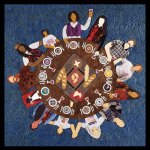
At the Olympic Opening Ceremony, there was a lot of backlash and chatter about just how offensive the scene of the perceived Leonardo da Vinci’s “The Last Supper” was to Christians—only to be confused with another supposed scene from Greek mythology. The artist claims that it was not his intent to mock any religion; instead, he “wanted to include everyone…” Isn’t that what Jesus would do, invite everyone to the table, making us all feel included and valued?

As my doctoral mentor, Leonard Sweet, had written, “The stage has a purpose, but the table sets the stage. If we invested as much energy setting the table as we do setting the stage, the church would be a wellspring of revival. The table represents who we truly are; the stage is who we want others to perceive us. The table embodies authenticity; the stage reflects appearance. Jesus dedicated His ministry to setting the table, not just performing on stage. Can we prioritize authenticity and gather around the table as much as gather for and spotlight the stage?” Indeed, the only thing that should be offensive to Christians are those among us who come to the table and partake of the body and blood of Christ without repentance and, after partaking in the Sacrament of Holy Communion, go about their sinful ways without transformation. 

1 Corinthians 11:27-28 

27 So then, whoever eats the bread or drinks the cup of the Lord in an unworthy manner will be guilty of sinning against the body and blood of the Lord. 28 Examine yourselves, and only then eat of the bread and drink of the cup. 

May we prioritize the eternal over the temporal, seeking nourishment from the One who can truly satisfy our hearts and souls.

In Christ!

Pastor Sela


Tags: , ,

Freedom

Freedom

7.3.24

It’s the season of celebrating independence and freedom with fireworks and barbeque. And, I hope you have a fun and safe celebration. But the concept of freedom extends far beyond the fight for national liberation.

Mark 5:21-43 tells a story that speaks directly to the yearning for freedom in our own lives. Here, we encounter two remarkable individuals facing immense struggles. A woman had been battling a relentless illness for twelve years, her life completely restricted by it. Imagine the desperation, the feeling of being trapped in a situation beyond your control.

The other story features a father desperate to find healing for his young daughter. Both individuals represent the very real struggles we face today. Maybe you’re battling a chronic illness, fighting to overcome an addiction, or grappling with the loss of a loved one. These experiences can feel like a prison, robbing us of the freedom to live life to the fullest.

What’s even more striking is how both individuals, despite societal constraints, pushed through the crowd to reach Jesus. The woman, considered unclean by religious law, disregarded societal norms to reach out for healing. Jairus, a synagogue leader, likely faced criticism from his community for breaking religious taboos to seek Jesus’ help. Perhaps, like the woman, he too had a change of heart, questioning who truly deserves God’s grace.

Two people in search of their freedom received it from Jesus that day. This story emphasizes that true freedom isn’t about status, wealth, or position. It’s about having faith in Jesus’ healing power.

Jesus’ message: Do not give up. Do not be afraid. Only believe. 

Healing comes in many forms, not always as we expect. While some receive miraculous healing in this life, others find comfort in knowing that greater healing awaits us in heaven. So, don’t be afraid to bring your burdens to Jesus. He can set you free, offering hope and a path toward wholeness in this life and the next.

Sela Finau


Tags: , , , , ,