RSS

Monthly Archives: December 2024

What Then Shall We Do? A Christmas and New Year’s Reflection

What Then Shall We Do? A Christmas and New Year’s Reflection

12.19.24

What Then Shall We Do? A Christmas and New Year’s Reflection

As we journey through Advent and approach Christmas, we hear John the Baptist’s urgent call from the wilderness: “Prepare the way of the Lord!” His challenge to the crowd resonates with us today: “What then shall we do?”

John reminds us that preparing for Christ’s coming is not about relying on our church traditions, family name, or how much money or time we give the church. None of these outward signs can genuinely prepare our hearts. Instead, it’s about how we reflect God’s love and justice in the way we live. John calls us to bear fruit that shows repentance—a life that aligns with God’s will.

This requires a shift in our attitudes and ways. Are we sharing the blessings God has given us, or are we holding onto them for ourselves? God’s blessings were never meant for us to hoard. They are meant to flow through us, reaching those in need. Preparing for Christ means living with open hands and open hearts. It means practicing compassion and integrity in our everyday actions. It means being generous to those who lack, showing fairness in how we treat others, and embodying God’s justice in all we do.

As we prepare to celebrate the birth of Christ, let us examine our lives and ask ourselves hard questions: Where do we need to let go of pride, selfishness, or complacency? How can we show more love and justice to those around us? Advent is not only a time to anticipate Christ’s coming but also a time to realign our lives to reflect His kingdom.

This Christmas, let us welcome Christ into our celebrations and our actions. As we step into the New Year, may we commit to living lives of generosity, compassion, and integrity—lives that prepare the way for the Lord every day.

Christ is coming—may our hearts, homes, and lives be ready to receive Him.

Merry Christmas and Happy New Year!

Pastor Sela 


Tags: , , , ,

Refined for the Season

Refined for the Season

12.11.24

Refined for the Season

Advent isn’t just about decorating our homes or checking off shopping lists—it’s about preparing our hearts and lives for the arrival of Christ. The prophet Malachi offers a challenging but vital message for this season: we need refining. Like a refiner’s fire purifying gold or a launderer’s soap scrubbing away dirt, God’s work in us removes impurities and instills qualities that shape us into Christ’s likeness.

This process is not always easy. It requires honest reflection and a willingness to let go of attitudes and habits that hold us back—selfishness, pride, impatience. But it also fills us with new gifts: love, peace, patience, and kindness, the fruit of the Spirit that makes us more fully who God has called us to be. Advent reminds us that transformation is possible; this is the season to let God begin that work in us anew.

Sometimes, we may resist this refining work because it feels 

uncomfortable or disruptive. Yet, just as we wash before we sit at a table or remove our shoes before entering a clean home, Advent calls us to spiritual preparation. It’s an act of love and respect—to ourselves, to God, and to the promise of Christ who is coming.

As we prepare for Christmas, let’s embrace this deeper call to readiness—not just for the celebration of a day, but for the ongoing work of God in our lives and the world. Join us next Sunday as we continue our Advent journey and reflect on the joy that Christ’s coming brings!

Love, grace, and peace!

Sela 


Tags: , , , ,

Second Review Of Moana 2 From A Critical Lens

Second Review Of Moana 2 From A Critical Lens

12.7.24

Second Review of Moana 2 From a Critical Lens

When I wrote my first review of Moana 2, I reflected on the power of storytelling, particularly when it comes to our Pasifika heritage. I encouraged us to hold space for both critique and appreciation—to celebrate the visibility the film brings while remaining aware of the complexities of how our stories are told. Now, as I think more deeply, I will review it from a critical lens, especially about the younger generation in my family, I have a question for you:

Do you know your story? Do you know your people’s talanoa (stories)?

Ko ho’o ha’u mei fe? ‘Oku ke ‘ilo ho’o talanoa?

I hope we’re not relying on Disney to teach us about our cultural heritage. When someone else tells our story, it comes with a twist—and a cost. The twist is that palangi (foreigners) will always frame it through their lens. What is the cost? Exploitation. While Moana 2 showcases Pasifika culture beautifully, it’s essential to ask who benefits. Disney has made billions off these films, yet our islands and communities see little of that profit. Couldn’t a company of Disney’s magnitude contribute to fighting climate change, which directly impacts many of our islands? Or perhaps fund scholarships for Pasifika youth to help preserve and promote our culture?

As I said before, the best way to tell our talanoa is for us to tell it ourselves. Share them with your children, your family, and your community. Write books. Create short films. Use your gifts to tell our truths.

And another thing—I’ve seen many of our Pasifika people engaged in debates on social media about identity, race, and ethnicity. While these talanoa (conversations) can be insightful and thought-provoking, they can also become exhausting. It’s difficult to have meaningful dialogue with those who lack the same depth of knowledge, lived experience, or cultural roots. Everyone views the world from a unique position shaped by their background and privileges. Colonization, at its core, seeks to erase these differences—pressuring us to conform to its standards while erasing the richness of our identities and cultures.

A vital part of preserving our culture and talanoa is language. Do you speak your cultural language? For many in the diaspora, the importance of our native languages is often overlooked. Native speakers acquire the language naturally at home, not in a classroom. When we fail to pass on our languages, we fail to pass on our culture—and in doing so, we risk fulfilling the colonizer’s agenda. Language is a core part of identity, and its loss leads to the erosion of cultural knowledge and traditions. To speak only the colonizer’s language and embrace only the master’s culture, including religion, is to slowly lose ourselves. Valuing and preserving our native languages is an act of resistance, resilience, and love for our heritage.

Still, I have to acknowledge the film’s positives. Moana 2 represents Pasifika people from across Polynesia, Micronesia, and Melanesia. This is a big deal. Representation matters—not just in movies, but also in classrooms, corporate boardrooms, and churches. And it’s worth noting how far we’ve come. The film avoids the stereotypical portrayals of Pasifika people as savages or troublemakers, which we’ve seen far too often in media.

For example, think of the offensive depictions in Jonah from Tonga (the TV mini-series) or the 2014 Sochi Olympics, where Tonga’s representation was reduced to a marketing ploy by a German underwear company. In my critique of the Sochi debacle, I wrote:

“If imperialism and colonialism are defined by acts in which a dominant culture marginalizes subgroups and exploits a minority group, then this is precisely what happened… While the physical presence of Tonga was clearly represented at the Olympic Winter Games, the name Bruno Banani is anything but representative of the island kingdom and its rich culture and traditions.”

(You can read the full critique on my blog: Representation Matters.)

So, while Moana 2 isn’t perfect, it’s an opportunity and a gateway to something greater. It offers visibility and a chance for us to reflect on our talanoa. It’s a reminder of the importance of owning our stories and the urgency of preserving the cultural pillars that sustain them, like language.

Ultimately, Moana 2 shines a light on the resilience, beauty, and interconnectedness of our people. But it’s up to us to take it further—celebrating our heritage, challenging exploitation, and ensuring that our talanoa remains vibrant, authentic, and unapologetically ours.

Malō ‘aupito. ‘Ofa atu. Folau ā.

sela finau

 

Tags: , , , , , ,

A Tongan Polynesian Pasifika Islander Christian American Perspective on Moana 2

A Tongan Polynesian Pasifika Islander Christian American Perspective on Moana 2

12.3.24

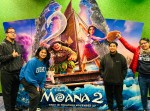
Disney’s Moana 2 continues its journey into the Pacific, once again presenting the richness of Pasifika culture to the world. This weekend, I went to watch it, joining countless others across Oceania and around the globe. The film is already breaking records at the box office, earning the biggest Thanksgiving week gross in cinema history. As a Polynesian and Tongan, I watched the film with both excitement and apprehension. The movie is not just entertainment; it holds cultural significance, especially as it brings our stories, traditions, and identities to a global audience.

One aspect that stood out was the portrayal of Māui. In Pasifika and Polynesian mythology, Māui is not merely a fictional character or a fun-loving trickster. Māui is a revered demigod who, in my culture, fished the Polynesian islands out of the ocean using his fishhook. These stories are not simply “mythology” in the dismissive sense often applied by outsiders; they are our cultural heritage, embodying values, wisdom, and identity passed down through generations. Moana, which means “ocean,” is more than a backdrop in these stories—it is central to our existence. The ocean connects our islands and our people; we are an extension of the moana.

I was struck by one reviewer’s criticism that Moana 2 was “too dark” and “scary” for children, based on her Christian perspective. Yet this same person praised the musical Wicked, a story steeped in themes of darkness, witches, and sorcery. What’s wrong with this picture? Such critiques reveal a troubling double standard, where the richness of Pasifika storytelling is dismissed while Western-centric narratives are embraced.

It’s understandable to feel apprehensive about an unfamiliar culture, but it’s not acceptable to label it as “scary” or “gross” without first seeking to understand it. Perhaps I’m projecting, as I typically research thoroughly before sharing an opinion publicly. Pasifika mythology existed long before Christianity arrived on our islands, and like every culture, we have creation stories that deserve respect and thoughtful engagement.

At its core, Moana 2 is a story of both literal and metaphorical voyages. Moana embarks on a journey filled with challenges, self-discovery, and growth, embracing her calling and her deep connection to her ancestors—the master navigators of the seas. Like any voyage, she cannot succeed alone. Moana learns the importance of relying on others, drawing on their diverse expertise and strengths to weather the storms.

This theme resonates deeply with Pasifika culture, which is inherently communal rather than individualistic. The voyage is not a solo endeavor but a shared experience. In Polynesian tradition, this sense of interconnectedness extends to the wisdom of our ancestors, whose guidance continues to illuminate our path, helping us navigate life’s uncertainties together.

The music didn’t resonate with me as the original. While using Polynesian stars like Dwayne Johnson and Auli’i Cravalho was appreciated, some music pieces could have benefited from a stronger connection to the Pasifika setting, aligning more closely with the cultural roots of the story. However, Moana 2 does excel in portraying the interconnectedness of people, nature, and culture. Moana’s journey highlights our reliance on community, respect for the ocean, and continuing connection to our ancestors.

Cultural appreciation and cultural appropriation often walk a fine line in films like this. While Disney makes strides in research and consultation, it’s vital for viewers—especially those unfamiliar with Pasifika cultures—to approach the film with humility and curiosity, not arrogance or ignorance.

As a pastor in the United Methodist Church, I view films like Moana 2 as opportunities for dialogue—between cultures, faiths, and generations. To my fellow Pasifika people: let’s hold space for both critique and appreciation, using this opportunity to affirm our talanoa or stories’ rightful place in the world. To others: may this film be a doorway to greater understanding and respect for the beauty and complexity of Polynesian culture.

Malō ‘aupito. ‘Ofa atu. Folau ā. 

Sela Finau


Tags: , , , , , , , , , , , , , , ,