RSS

Category Archives: Philosophy

Palm Sunday Prayer

Palm Sunday Prayer

3.24.24

Dear God, on this Palm Sunday, we remember Jesus’ triumphant entry into Jerusalem; we echo the crowd’s joyful shouts: “Hosanna! Blessed is the one who comes in the name of the Lord!” (Mark 11:9).

Yet, even amidst the celebration, a deeper understanding stirs within us. We recognize the foreshadowing in Jesus’ arrival on a donkey, a symbol of humility and peace, not on a mighty warhorse. This humble entrance reminds us that the path to true victory lies not in earthly glory but in following your will.

As we begin this Holy Week, we acknowledge the shadow of the coming days—the weight of the cross Jesus will bear on Good Friday. As you have shown us, there is no true understanding of Easter’s joy without first experiencing the sorrow of suffering. Just as Jesus walked through the valley before reaching the mountaintop, we must also be willing to face challenges with unwavering faith.

Lord, help us see beyond the outward spectacle and recognize the true message Jesus brings. Like the branches laid at his feet, may we surrender our pride and self-importance, paving the way for your reign of love and justice in our hearts.

Grant us the courage to follow Jesus, even when the path leads not to earthly glory but service and sacrifice. May we, like the children who sang his praises, embody a spirit of joyful faith, unwavering in our belief in your love and the promise of redemption.

In Jesus’ name, Amen.


Tags: , , ,

Tuesday of the Fourth Week in Lent

Tuesday of the Fourth Week in Lent

Day 18: Gracious God, help us identify the “tables” in our lives that need flipping, whether it be harmful habits, negative thoughts, or judgmental attitudes. Grant us the courage to overturn them in pursuit of your will, replacing them with the fruits of your Spirit – love, joy, peace, patience, kindness, goodness, faithfulness, gentleness, and self-control (Galatians 5:22-23). In Jesus’ name, Amen.


Tags: ,

Isn’t About Earthly Success

Isn’t About Earthly Success

2.29.24

This past Sunday’s message explored the message of Mark 8:31-38, reminding us that following Jesus isn’t about earthly success or comfort. The message emphasizes:

  • Living authentically: Upholding our values, even when faced with pressure or difficulty.
  • Love and service: Prioritizing the needs of others and demonstrating compassion, inspired by Jesus’ teachings.
  • Sacrifice and commitment: Embracing the core values of the gospel, even if it means sacrificing personal gain.

Following Jesus requires living our faith with courage and integrity. This includes standing up for what we believe in, acting with kindness, and embodying the message of love and hope through our actions. Just as the first disciples faced challenges, we, too, will encounter moments where unexpected circumstances test our faith.

We are reminded that faith is a journey with challenges, but through perseverance and commitment, we can make the world a brighter place, one act of compassion at a time.

Sela Finau


Tags: ,

Investing for the Kingdom: A Reflection on the Parable of the Talents

Investing for the Kingdom: A Reflection on the Parable of the Talents

Investing for the Kingdom: A Reflection on the Parable of the Talents

Exploring the Parable of the Talents in Matthew 25:14-30 (sermon from 11.19.23), Jesus, in preparing his disciples for the Kingdom of Heaven, narrates a story of a master entrusting different talents to three individuals before embarking on a long journey.

The master expects diligence and active engagement, not idle waiting. Upon his return, the two servants who received more talents had doubled their investments, but the one entrusted with a single talent returned it without any growth. This servant’s fear and tendency to compare himself to others led to inaction, resulting in disappointment from the master.

The key lesson drawn from this parable is a call to stewardship. As stewards of God’s gifts—be it talents, abilities, or resources—we are reminded not to waste what has been entrusted to us. The perspective of being stewards, not owners, encourages us to manage our lives, time, and resources wisely.

The sermon emphasized the importance of an open-handed approach to blessings. Rather than tightly holding onto resources, we are encouraged to give and invest in the kingdom. Fear and the trap of comparison were identified as hindrances to effective investment. The dangerous game of comparing ourselves to others can lead to playing it safe and missing out on opportunities to make a positive impact.

Faith involves taking risks and trusting in God. Stepping out in faith and risking it for Christ is the challenge presented to individuals and the church. The kingdom doesn’t grow if faith is kept private or if we expect the community to come to us. The parable challenges us to make something meaningful with our lives and take the necessary risks to be faithful stewards.

The conclusion posed a direct question: are we willing to risk our most valuable possessions for Christ and invest our treasured gifts for the kingdom? The call to let go and let God was extended, irrespective of the quantity of talents one possesses. The message resonated with a challenge to reflect on personal investments for the kingdom, emphasizing that the church will continue, but the question remains: how will our investments perform?

The final prayerful reflection urged a response like the first two servants in the parable, stating, “Here, God, I didn’t waste your investment. I used it wisely for your kingdom. I took the risk and placed my trust in you.”

What is your response to the call of faith, trust, and investment for the kingdom?

<><Sela Finau


Tags:

Embracing the Beatitudes: Living Like Jesus

Embracing the Beatitudes: Living Like Jesus

11.10.23

Embracing the Beatitudes: Living Like Jesus

For All Saints Sunday, we explored the Beatitudes, the profound blessings Jesus shared in the Sermon on the Mount. These blessings challenge our conventional thinking, focusing on qualities like humility, meekness, and mercy rather than worldly success.

Think of the Beatitudes as a guide to living a life inspired by Jesus. They’re not just abstract ideals but reflect Jesus’ experiences and values. These blessings remind us to seek God’s presence when life gets tough. Finding contentment in who we are, valuing kindness and cooperation, and showing mercy to others are at the core of these teachings.

Moreover, the Beatitudes promise a profound sense of hope and renewal. By embodying these qualities and extending mercy to others, we not only reflect the spirit of the Beatitudes but also walk in the footsteps of Jesus.

May we embrace these blessings daily, becoming more like Jesus and sharing his transformative message with the world.


Love God ~ Love Neighbor

Love God ~ Love Neighbor

11.3.23

In Sunday’s sermon, we delved into the significance of Reformation Sunday, commemorating Martin Luther’s pivotal protest against the Catholic Church 506 years ago. Luther’s stand, sparked by his opposition to the sale of indulgences, emphasized God’s grace and love over human deeds. This historical event led to the Protestant Movement and shaped our Methodist faith today.

Drawing parallels to the sermon, the scripture from Matthew 22:34-46 highlighted Jesus’ response to Pharisees questioning him about the greatest commandment. Jesus distilled the essence of faith, emphasizing the paramount importance of loving God wholeheartedly and extending that love to others. This teaching underscores the central role of love, compassion, and empathy in our faith, transcending mere religious rituals and legalistic obedience. It challenges us to embody these principles in our daily lives, reinforcing the foundational message of love for God and love for one’s neighbor found throughout the gospels.

Love and Grace,

Sela Finau


Tags:

Church Trial

Church Trial

9.21.23

In the secular world, trials are a common and expected part of the legal system. However, when it comes to a trial within the walls of a church, it carries a weight of embarrassment and sadness. Among all communities, the church is expected to be a place where matters are resolved amicably. When individuals encounter conflicts with one another, they typically engage in discussions guided by grace and, at the least, aim to attain a “Just Resolution.” Regrettably, in this instance, that ideal has not been met. Instead, the entire world is now watching, taking note of the Christian community and the church’s proceedings in The United Methodist Church.

Regardless of the verdict’s outcome, it is painfully evident that our community is deeply fractured and suffering. Bearing witness to the testimonies of both the complainants and the respondent has been disheartening. I deeply empathize with Bishop Carcaño’s experiences, the denomination’s first Latina bishop, recognizing that many other clergy members have likely endured similar struggles. The pain of my colleagues is palpable, and the damage inflicted is painfully clear.

This case is marked by a shattered sacred trust, riddled with misunderstandings, false expectations, marred perceptions, and a pervasive lack of communication. It has unfolded in a culture of suspicion where everyone feels entitled, violated, and convinced of their own righteousness while undermining the Bishop’s authority. All of this occurred amid the backdrop of a global pandemic, further complicating matters with accusers and the accused, self-interest, power struggles, and imbalances. Implicit bias, race, and gender also contribute to the situation. The jury must carefully discern a complicated case and ask, “What are the facts?” “What is truth?” Ultimately, its resolution will hinge upon the Book of Discipline and, perhaps, our Wesleyan theology of grace.

This particular situation, it appears that like-minded individuals were recruited to amplify their stance, as if growing in numbers could validate their position. This situation brings to mind the trial of Jesus, where numerical strength also played a role in his crucifixion.

In this trial, there are no victors; the church bears the heavy cost of the harm done. Whether a guilty or innocent verdict is reached, it cannot erase the damage inflicted. At the very least, this trial has been heart-wrenching, but it also offers valuable lessons.

My experience with Bishop Carcano while serving on the General Commission on Religion and Race (GCORR) Board from 2012 to 2016 was incredibly positive and truly inspiring.

In any scenario, my fervent hope and prayer are that all charges against Bishop Carcaño will be acquitted.

Sela Finau

Update 9.22.23 Bishop Minerva Carcaño was found Not Guilty on all charges. Amen.


Mind the Gap

Mind the Gap

9.21.23

This past Sunday, we celebrated our church’s 64th anniversary with worship, followed by a marvelous feast. The food selection was fantastic, with plenty to go around and even some leftovers to take home.

In our message from Romans 14, we explored the vital theme of “Mind the Gap.” The message emphasized the significance of love, unity, and harmony as we navigate the natural gaps stemming from differing perspectives in our church family.

We’re called to bridge these gaps, demonstrating Christ’s transformative love within us and in the world. Just as passengers must exercise caution on a train platform, we, as a church, must be vigilant in our interactions, especially when our experiences and beliefs diverge.

These gaps go beyond theological differences; they include generational perspectives, approaches to social issues, and the impact of our upbringing and context. These gaps can hinder our unity as the body of Christ when we do not fully seek to understand.

However, “Mind the Gap” is not a mere warning; it’s an invitation to bridge these divides with love. As we celebrate our 64th anniversary, let’s remember that God’s faithfulness has guided us through endless challenges. Looking ahead, we envision a church that celebrates diversity and thrives in unity, love, and service.

As we stand at the threshold of the next 64 years, let’s embrace love, tolerance, understanding, and unity. Our church’s future will be marked by deeper relationships, reaching our community, and shining with Christ’s love.

Thank you for being part of this incredible journey. Happy 64th anniversary to our church, and may God bless us abundantly as we continue to “Mind the Gap” in faith and life.

Peace and Grace!
Sela Finau


Will of God

Will of God

8.31.23

Romans 12:1-8 deals with the concept of interconnectedness within the body of Christ. The passage reminds us that we are not isolated individuals but rather vital members of a collective whole. Together, we contribute to a diverse array of roles, from prophecy and ministry to teaching, support, generosity, leadership, and compassion.

While we can undertake these roles individually, their impact is magnified when embraced within a supportive community. Our actions, infused with God’s grace, transform our lives into offerings that align with God’s will. This reflection encourages us to consider the sources of influence in our lives. Are we living according to our own will, the noise around us, or are we attuned to God’s guiding whispers?

As we move forward, let us take time to pray and connect with God. By doing so, we can discern God’s will amidst the distractions. In summary, our lives are intertwined in the body of Christ, and as we embrace our unique roles, may we remember that our actions, guided by God’s grace, create a harmonious symphony that fulfills God’s purpose.


Tags:

Tongan Funerals

Tongan Funerals

8.18.23

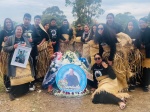
A couple of weeks ago, I traveled to Sydney, Australia, to attend the funeral of my brother, Sam Taufa (referred to as a first cousin in Western terms). Sam’s mother, Ma’ata Ngalo’afe, and my father, Tevita Vaiola Finau, are siblings. It is important to note that the word “cousin” does not exist in the Tongan language and culture. Our “cousins” are considered our brothers and sisters. The entire round-trip, spanning from Dallas-Fort Worth to Los Angeles and finally to Sydney, consumed two days in transit, accompanied by two days on location, and two weeks for recovery. I am still in recovery mode. (LOL) The airborne segment alone lasted over eighteen hours, while the rest comprised a 6-hour airport layover, complete with check-in, TSA, Customs, and baggage claim. While some may view the trip as unnecessary, in my family and culture, it is a part of our identity.

I typically take numerous photos and short videos for a couple of reasons. Firstly, I love capturing moments, enabling me to reflect upon them in the future. Secondly, when I participate in significant events like funerals, I recognize the value of allowing distant family members who couldn’t be present to witness the presence of other family members. Additionally, given the uncertainty of our next gathering, we seize the chance to capture photographs with our family. Despite being thousands of miles away, technology facilitates our connection and collective grieving. Furthermore, no matter the distance, the moana (ocean) connects life, for it is life.

Moreover, a funeral, particularly within the Tongan or Pasifika context, also serves as a family reunion. Despite the somber circumstances, it offers an opportunity for family members to reconnect. Sometimes, years or even decades may have passed since our last encounter, but we effortlessly pick up from where we left off when we gather. Occasionally, we may not have met, but our family connections through our parents and grandparents are significant enough that we pick up the bonding easily through talanoa or by telling stories. This atmosphere is lightened by humor being a substantial part of our family and culture. Consequently, even during this event, marked by sadness, the occasion retains a lighthearted quality. This perspective on life acknowledges the inevitability of both beginnings and endings, life and death.

Moreover, as a pastor, I’ve observed a distinct contrast in the nature of funerals. In the context of Tongan/Polynesian/Pasifika funerals, our family, friends, along with various churches, irrespective of their denominations and the broader community, come together to honor the departed and be present for the family. This collective presence is why our funerals often draw large attendances. This pattern sharply contrasts with the majority of funerals I have officiated or attended within American churches where I have served.

Several individuals unfamiliar with our culture have inquired about the wrap worn around our waist. Alongside wearing modest black attire, these wraps are known as ta’ovala and constitute the traditional dress code for Tongan funerals. The labor-intensive mat-woven ta’ovala worn to a funeral signifies one’s relationship to the deceased.

Tongan society and families adhere to a hierarchical structure. While Tonga might be perceived by some as upholding matriarchal traditions due to the higher rank of sisters over brothers, the distribution of roles and responsibilities actually maintains a harmonious balance between genders. A prime illustration of this is the ‘ulumotu’a role, entrusted to the eldest brother or son. This role entails overseeing significant family occasions, including funerals.

Within Tongan funerals, the ta’ovala you don reflects your place within the hierarchical structure in relation to the deceased. The father holds the position of the family head. This designation extends to the father’s brothers (referred to as uncles in Western terms), who are regarded as additional fathers. The highest rank on the hierarchy chart is held by the father’s sisters and their children, with the eldest sister occupying the top position, known as a “fahu.” This individual receives special recognition during funerals, weddings, and other family ceremonies.

When attending a funeral for a father’s sister or her children, demonstrating humility and rank involves donning the largest ta’ovala, which covers the body from head to toe. Those who of this rank are known as liongi. They are typically responsible for food preparation and serving. At a father’s funeral, his children also wear significant ta’ovala displaying great loss.

Tongan funerals are often financially demanding for families due to the comprehensive services (typically food) provided to visitors, primarily from churches, who visit the family in the days leading up to the wake and on the day and night of the funeral. Thankfully, family members, churches, and the community help. Traditionally, Tongan funerals span an entire night, culminating in a final worship service in the morning, followed by the burial ceremony.

It’s worth highlighting that the collaborative spirit of Tongans underscores our emphasis on communal living as opposed to individualism. This principle is integral to our identity and cultural fabric, which is why Pasifika families might not always prioritize accumulating wealth. It’s a rarity to encounter a Tongan family stockpiling possessions, for these belongings are typically shared with those within the community who require assistance.

Regarding Sam’s funeral, since his mother is my father’s younger sister, my designated role is a “liongi.” However, my sister Evaline, who would typically be considered a first cousin in Western terms but holds a higher rank due to being the daughter of my father’s sister Etina, gave me a pass because of my pastoral role. Such are the few benefits of being a Reverend! Haha. Representing our family as “liongi” were my two nieces, Mele and Mata (who traveled with me), and my nephew, Lieni (who lives in Sydney), in honor of their fathers, my brothers.

Additional customs are observed within the context of a funeral procession, encompassing practices such as the duration of wearing black attire to symbolize mourning and participating in rituals like hair-cutting ceremonies.

Fundamentally, the social hierarchy within Tongan society takes the form of a familial structure. Each individual is assigned a distinct role and position, analogous to finding a seat at a communal table. One might serve as a server at one table, only to be seated as the esteemed guest of honor at another.

Please inform me if you possess knowledge that contradicts my explanation of Tongan traditions and customs. My explanation is not definitive, and I am sure there are other significances I am unaware of. However, this is my understanding of Tongan funerals and the existing hierarchical system within our culture.

Malō ‘aupito.

Sela Finau

#SamTaufa #TonganFunerals #PasifikaCulture #Polynesian #Oceania #MoanaCulture

 

Tags: